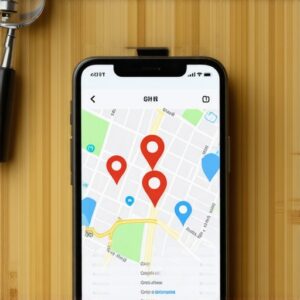
The digital coordinates of local trust and mechanical errors
To diagnose broken local data, you must deploy an specialized audit that checks real-time location metrics, GPS coordinates, behavioral triggers, and Google Business Profile integrity. A proper local validation workflow isolates algorithmic friction and corrects discrepancies that push your brand out of the Map Pack. While traditional SEO audits focus heavily on domain authority and clean keyword density, mapping algorithms rely on immediate geographic relevance, verified localized entities, and physical proximity indicators. The system must confirm your location signals on a granular street level before search engine crawlers can establish consistent trust.
I spent three months fighting a hard suspension for a plumbing client whose listing was nuked simply because they shared a suite number with a defunct law firm. Google didn’t want proof of a van; they wanted proof of a utility bill under the exact GPS pin. They demanded a live video walk-through showing the physical door, the suite plaque, and the tools of the trade sitting inside the office space. That client lost thousands of dollars in potential emergency plumbing calls while we argued with automated support bots. That case was not resolved by automated submissions; it required manual documentation. To prevent such disasters, deploying the essential toolkit for a manual google business profile audit is the only method that reveals these deeply buried geographic conflicts before the algorithm flags your brand as fraudulent.
Local data is fragile. When coordinates drift by even a few decimal places, search engines perceive your physical storefront as a virtual ghost kitchen. This spatial confusion reduces your impression share inside highly competitive three-mile radius zones. Understanding the mechanics of local signal delivery is what separates high-performing service providers from those who remain invisible.
The ghost in the GPS coordinates
Geocoding precision requires matching your physical address to exact decimal degrees of latitude and longitude inside the global coordinate database. When search systems retrieve your location, they look for matching coordinates across major map aggregators, local business listings, and governmental records. A single digit typo in your spatial data causes a silent mapping error that dilutes your localized ranking power. This occurs because the algorithmic centroid calculations favor entities with consistent coordinates over those with conflicting location pins.
“Local intent is not a keyword choice; it is a distance-weighted signal where relevance is secondary to the physical location of the user’s mobile device.” – Map Search Fundamental
We often see businesses buy great tools only to receive inaccurate diagnostic feedback because their local data is dirty. Some services offer wrong ranking data because they rely on fixed data centers instead of real-time mobile GPS simulation. If your tracking platform measures rankings from a single server yard five miles away, it will miss the micro-proximity shifts that happen at the corner intersection. Our diagnostic checks revealed that the local client’s office pin had been dropped in the middle of a retention pond behind the office park. To the algorithm, the company was operating out of a body of water. No amount of authority building can overcome an address that Google registers as submerged.
If you have recently moved, your old coordinates will continue to battle your new physical address for authority. Correcting this requires purging historical records and ensuring that your active profile possesses the correct verification. Business owners must realize that automated systems frequently overlook these historical inconsistencies.
How we fixed our messy business data across fifty directories
An effective clean-up campaign requires systematically auditing every local citation to correct mismatched phone numbers, old addresses, and duplicate profiles. You must start by collecting your primary business registration details and cross-checking them against major directories like Yelp, Apple Maps, and Bing Places. Removing outdated listings ensures that search engines do not receive conflicting trust signals about your active brand location. Consistency across these third-party portals validates your primary Google Business Profile and stabilizes your local visibility.
Manual auditing remains the single most effective way to address deep database conflicts. Many organizations believe that using automated listing aggregators will clean up their presence instantly. However, automated systems often miss legacy entries or create automated duplicates. This is why we recommend checking out how we fixed our messy business data across 50 directories using manual verification to clean the slate. Clean directories provide a foundation of trust that search engine crawlers rely on when calculating local authority.
During this audit process, you must watch out for duplicate business profiles. Having more than one listing for a single location divides your review power and creates algorithmic confusion. Using targeted services to fix duplicate google business profiles ensures that your signals are consolidated into one authoritative asset. If Google detects two profiles at the same address with similar names, it will often suppress both listings to prevent search spam.
The local authority reading list
- Learn step-by-step methods in the essential toolkit for a manual google business profile audit.
- Understand how diagnostic software affects your position by exploring the real impact of gmb toolkits on your map pack position.
- Examine why automated platforms fail in why manual data cleanup beats automated seo tools every time.
- Discover the criteria for selecting rank-tracking assets by reading choosing the right ranking software for your google business profile.
- Uncover structural data issues using how to use local tools to find the gap in your map optimization.
The three mile radius that determines your revenue
Your local search visibility is bounded by a spatial boundary where geographic proximity outweighs standard organic search authority signals. Within this hyper-local zone, user proximity to your physical office is the primary factor determining whether your listing appears in the Map Pack. To capture leads in this tight radius, your profile must generate continuous geo-relevance signals such as localized customer reviews and localized photo uploads. Aligning your digital footprints with this real-world boundary prevents competitor listings from capturing your adjacent neighborhood traffic.
To diagnose where your visibility drops off, you need to use spatial tracking software. By assessing your rankings on a coordinate grid, you can pinpoint the exact streets where your business ceases to appear in local search results. Discovering these performance boundaries is made easier when utilizing professional ranking toolkits to find local gaps within your primary service markets. These tools generate a visual heat map that shows exactly where your competitors are out-ranking you.
If your business relies on dispatching technicians to client homes, you must optimize your service area boundaries. Many companies make the mistake of setting a service area that is too broad, which dilutes their local proximity weight. Instead, you need the ranking toolkit for service based businesses without a storefront to map your territory correctly without triggering spam filters. Restricting your service area to your actual operational radius will improve your local prominence inside your core neighborhoods.
The forensic trace of service area polygons
Defining your service area polygon with real-world spatial accuracy prevents your profile from being flagged for geographic exaggeration. Google Business Profile guidelines require that your service areas represent realistic travel times from your central dispatch office. If you draw an aggressive polygon covering three states for a single-vehicle plumbing business, the system will flag the profile as deceptive. Keeping these zones aligned with your actual customer density protects your account standing and increases your local relevance.
“Relevance is not simply a matter of textual match; it is the alignment of real-world activity with digital declarations.” – Local Entity Authority
When listings are suspended due to excessive geographic targeting, you must take immediate corrective action. This requires reducing your service area to a compact, logical zone and updating your online documents to reflect your actual operations. Business owners facing this situation can turn to specialized local seo services to fix gmb hard suspension for service area business issues to restore their listings. These services adjust your profile parameters to match Google’s strict regional guidelines.
We also see local campaigns stumble when they create too many doorway pages targeting neighboring towns. If your website has dozens of thin city pages with near-identical text, search systems will apply a localized quality penalty. If your site has been flagged, employing seo services to fix over aggressive location page strategy penalties can help prune those low-quality pages and consolidate your local relevance on your main service pages. Quality local landing pages must contain unique local photos, regional customer testimonials, and specific project details.
Rebuilding the trust signals that keep you on the map
Restoring trust signals requires generating verified user interactions, authentic customer reviews, and consistent local citations. Search engines track real-world user behavior, including driving direction requests, direct phone calls from listings, and localized mobile searches, to determine if a business is legitimate. If your listing has suffered from automated spam flags, you must replace suspicious signals with verified proof of local operations. Building a natural rhythm of organic customer feedback is the most reliable way to maintain long-term local positions.
This trust calculation can be severely damaged by malicious competitor actions. If your listing is targeted with low-quality, automated reviews, you must address the issue immediately before search algorithms depress your rankings. Utilizing professional reputation management and review repair services allows you to identify fraudulent reviews and file successful removal appeals with Google Business Support. Once the fake reviews are cleared, your organic rating score will quickly stabilize.
For local brands recovering from visibility drops, the restoration process requires a methodical approach. You cannot rely on shortcuts or quick automated fixes. By deploying services to restore trust signals for local seo, you can audit your entire digital footprint to resolve inconsistencies that trigger automated flags. Maintaining clean data, encouraging authentic consumer engagement, and keeping your profile updated ensures your business remains prominent within the local map ecosystem.