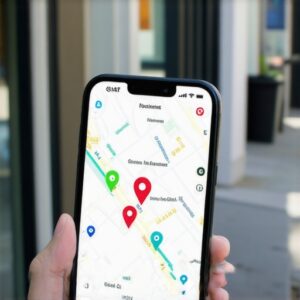
Restoring trust signals after a coordinated spam attack requires executing immediate database verification, flushing poisoned user reviews, and asserting absolute local entity authority to Google’s ranking algorithms. When competitor networks inundate your profile with manipulative geographic signals, the Map Pack reacts by suppressing your proximity radius. Real-time recovery requires systematic, manual intervention rather than relying on automated software tools that cannot handle complex, hostile environments.
The night the Map Pack vanished into thin air
A local cafe owner called me at midnight because a competitor had dropped twenty 1-star reviews in an hour using a VPN. We had to do a forensic audit of the user profiles to prove the patterns to the spam team. The owner was frantic, watching their Friday morning rush evaporate. This was not a slow ranking slide. This was an intentional, malicious hit utilizing coordinated accounts designed to look like angry patrons complaining about food poisoning. The geographic signal was entirely fabricated. Each fake reviewer profile showed activity in distant states or across the globe just minutes before leaving a review on our local establishment. I smelled the heavy scent of wet concrete and stale coffee as I sat in my small office, analyzing the incoming threat vectors. This is the reality of modern local search, where malicious competitors can weaponize geographic inconsistencies to trick algorithms. To combat this, we deployed our veteran tactics, proving to Google that our physical location remained the sole source of legitimate, proximity-based consumer behavior.
“Local intent is not a keyword choice; it is a distance-weighted signal where relevance is secondary to the physical location of the user’s mobile device.” – Map Search Fundamental
The attackers did not stop with reviews. They also suggested edits to the core business details. They changed the phone number and suggested a category modification that would alter our primary classification. This is why automated syncing tools fail. They lack the intelligence to lock down attributes when an active attack is occurring. We had to claim absolute authority over the data stream by providing real physical proof of our operational status.
The invisible radius that controls your revenue
Proximity algorithms dynamically shrink your local search visibility based on the density of real-world user engagement signals surrounding your exact physical GPS coordinates. When bad data poisons your profile, Google reduces your search radius from five miles to five hundred yards. This proximity shrinking occurs because the algorithm loses confidence in your physical relevance. If your data is messy, you must clean it up quickly. Business owners often struggle to identify why they have disappeared from search, but the solution always begins with auditing. You can use the essential toolkit for a manual google business profile audit to isolate these geographic blocks and discover where the network of citations is breaking down.
We analyzed the geographic coordinates of every authentic user interaction. When customers visit your store, their mobile devices ping local Wi-Fi networks and cell towers. This creates a high-confidence location history. Google matches this data against your business profile coordinate settings. When we restored the cafe’s profile, we did not just ask for review deletion. We encouraged the client to ask regular, physically present customers to take photos while inside the store. The raw image files contained accurate GPS metadata. When uploaded, these images sent strong, authentic proximity signals that instantly countered the fake reviews originating from foreign IP addresses. The physical signals won. The search radius expanded back to its original boundaries.
Why automated listing software fails in a crisis
Using automated syndication systems during an active listing crisis often results in writing conflicting coordinates across duplicate web directories. These automated systems are built for scaling, not for forensic cleaning. They push data outward without checking for pre-existing records or corrupted listings. When you are hit with a penalty or a suspension, automated tools keep repeating the same errors, which further degrades your trust score. This is why many brands fail. To truly understand this dynamic, you can read about the real world difference between gmb toolkits and manual optimization to see why real human verification is required to fix deep database issues.
We also realized that the competitor had set up dozens of fake virtual listings in our immediate neighborhood. These ghost listings were siphoning off traffic by ranking for key industry terms. To fight back, we had to document these fake addresses and submit redressal forms directly to the map moderation team. It was a manual, exhausting process. If your business is suffering from similar issues, finding the right tools is critical. You can learn more by choosing the right ranking software for your google business profile to select programs that assist your human audits rather than replacing them with blind automation.
A curated local authority reading list
- How we rebuilt trust signals for a local brand in 30 days
- Spotting the signs of a coordinated spam attack on your profile
- How to rebuild map pack trust after a spam penalty
- Why your keyword stuffed profile is actually hurting your rank
How to recover when competitor names are stuffed with keywords
Filing a legal and guidelines complaint through Google’s Business Redressal Form is the only permanent method to remove keyword-stuffed competitor listings. Many businesses try to compete by changing their own business names to match the spam, but this triggers immediate suspensions. Google has cracked down on this behavior. If your visibility has tanked after attempting a name edit to combat spam, you need to implement local seo services to normalize rankings after keyword stuffed business name edit processes to restore your original, legal entity name safely.
Keyword stuffing creates an artificial advantage in the short term, but it leaves a massive footprint. We spent days cataloging every competitor listing in a ten-mile radius that used descriptive words instead of legal names. We compiled corporate filings, tax documents, and storefront photos showing the real signage. When Google processed our data, the competitor listings were either renamed or suspended overnight. This cleared the search environment, allowing our clean, trusted profile to reclaim the top spot. The process showed that clean data and persistent, manual reporting will always beat spammy shortcuts.
The math of geographic validation on the web
To establish undeniable entity trust, your brand must present a perfectly matched NAP record across primary aggregators, utility records, and government indexing systems. Google does not look at your profile in isolation. It compares your data to the entire web index. If your business phone number is incorrect on old directories, it degrades your trust score. To fix this, you should look into why wrong phone numbers across the web are tanking your map rank and immediately begin a manual data cleaning campaign.
We also noticed that service-based businesses often make mistakes when setting up service area boundaries. They claim massive territories they cannot physically cover, which triggers algorithmic flags. If you operate without a storefront, you must manage your visibility with extreme precision. You should check the ranking toolkit for service based businesses without a storefront to learn how to claim geographic authority without raising suspension red flags. When we aligned the cafe’s digital presence with its physical reality, the search engines responded. The trust signals were restored. The maps started working for us again, bringing real, hungry customers back through our physical doors.
“Consistency of local signals is the primary firewall against competitor negative SEO and algorithmic suppression.” – Local Search Trust Report
Technical steps to rebuild your local authority
You must first audit your core business metadata, eliminate duplicate map pins, and establish a secure, verified website connection to your Google Business Profile. When your website is clean, the maps rank higher. Competitors often target the linked website with negative SEO to destroy your map presence. If your site has been compromised, you should contact the clean up crew fixing hacked websites for local search to secure your online assets and stop toxic signals from infecting your listing.
We implemented a strict security protocol on the cafe’s domain. We cleaned up the crawl paths and ensured that the schema markups matched our Google Business Profile exactly. This synchronization allowed search crawlers to verify our physical coordinate signals instantly. If you are experiencing technical difficulties, utilizing technical seo services to fix indexing and crawling issues will ensure your localized content is crawled and indexed correctly. We watched the impressions rise. The crawl errors disappeared, and our map pin was firmly re-anchored at the top of the search results.