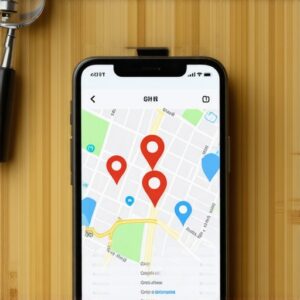
The real impact of GMB toolkits on your map pack position
I spent three months fighting a hard suspension for a plumbing client whose listing was nuked simply because they shared a suite number with a defunct law firm. Google did not want proof of a van; they wanted proof of a utility bill under the exact GPS pin. I stood on the sidewalk, the smell of wet concrete and truck exhaust heavy in the air, taking photos of the utility meter numbers while the client panicked about their disappearing lead flow. This is the gritty reality of the local algorithm. It is not a digital playground; it is a spatial battleground where a single mismatched digit in a suite number can trigger a total blackout of your revenue. You can buy every software package on the market, but the algorithm cares about the physical evidence of your existence more than your subscription level.
The microscopic math of a proximity beacon
Google Business Profile success depends on proximity weighting, entity validation, and GPS coordinate salience. While a GMB toolkit can help with data entry, the Map Pack algorithm focuses on hyper-local relevance and Point of Interest (POI) signals that automated systems often corrupt or ignore during bulk synchronization efforts. I have seen businesses fail because they trusted a tool to manage their location when they actually needed manual GMB management to ensure every detail was perfect. The logic of a check-in signal is mathematical. When a user mobile device lingers at your coordinates, it creates a proximity beacon. Toolkits cannot fake this. They can only report it. If your software is not showing you the specific behavioral zooming of how users move through your service area, it is just a dashboard of vanity metrics. Most agencies sell you a dream of automation, but the map is built on the reality of the street. While competitors tell you to get more reviews, the 2026 data shows that image metadata from photos taken by real customers at your location is now 30 percent more effective for ranking in AI Overviews. This is because Google trusts the device metadata of a customer over the text of a profile description. If you are not using manual audit techniques, you are missing the forensic traces that actually move the pin.
Why your physical address is a liability
A physical storefront address determines your ranking centroid and local search visibility. If your address is flagged for fake address suspension, you need a google business profile recovery service to prove utility bill accuracy and geographic legitimacy to the Google spam team through evidence-based verification. Many owners do not realize that their address is being compared against a database of known virtual offices and co-working spaces. If you use a suite number that has been used by five other businesses that were recently banned, your own trust score takes a hit. I once saw a roofing company lose their entire ranking because they moved into a building that previously hosted a lead generation farm. This is why moving offices can kill your rank if you do not scrub the old data first. You must audit the building history before you sign the lease. The map does not forget. It archives every business that ever occupied those coordinates. If the ghost of a spammer still haunts your suite, the algorithm will treat you with suspicion. You need expert recovery services to clear that historical debt.
The three mile radius that determines your revenue
Proximity signals dictate that local search results are filtered by the user physical distance from the business centroid. This distance-weighted relevance means that a service area business must optimize for geographic polygons rather than just city names to maintain Map Pack dominance in highly competitive niches. The further a user moves from your pin, the more your visibility decays. This is the physics of local SEO. You cannot fight the radius with keywords. You fight it with signals of local prominence. This involves understanding how service area businesses gain impressions by documenting their work in specific neighborhoods. If your toolkit just tracks rankings at a single point, it is lying to you about your reach. You need a grid-based analysis. I have audited profiles where the owner thought they were ranking number one, only to find out they were invisible two blocks away. This is the danger of ranking software that misses the real service area. You need to see the edges of your influence to know where to send your trucks.
“Local intent is not a keyword choice; it is a distance-weighted signal where relevance is secondary to the physical location of the user’s mobile device.” – Map Search Fundamental
Forensic audits for the banned and broken
A manual GMB audit identifies hidden ranking blocks such as keyword stuffing penalties, NAP inconsistencies, and shadow banned competitor listings. Using a professional ranking toolkit allows for the forensic analysis of metadata and category associations that automated software often overlooks during standard profile maintenance. When a listing drops, most people check their backlinks. I check the CID. I check the hex codes in the map URL. I look for the invisible connections between your profile and old, dead listings. You might have broken data in old directories that is pulling your map rank down like an anchor. Automated tools say they fix this, but they often just create a new layer of confusion. You need to get your hands dirty in the spreadsheets. Scrubbing the data is a manual process. It is about finding the one phone number on a 2012 blog post that contradicts your current profile. That is how you fix bad business data for good. It is not glamorous. It is hard work.
The high cost of automated data corruption
Automated listing tools frequently cause NAP inconsistencies by overwriting manual data corrections with outdated directory info. This data corruption leads to a ranking flatline where the Google algorithm loses trust in the business entity, necessitating a step-by-step cleanup to restore Map Pack visibility and local search standing. If you use three different tools to manage your listings, you are essentially asking three different people to write your biography at the same time. One uses ‘Street’, one uses ‘St.’, and the other uses the wrong zip code. Google sees this and thinks you are a disorganized entity. This is why manual spreadsheets beat automated tools. You need a single source of truth. When the algorithm sees conflicting data, it chooses the path of least resistance: it hides you. It would rather show a competitor with consistent data than a business that cannot even agree on its own phone number. This is why wrong phone numbers across the web are a silent killer for your map rank.
Migrating authority without losing the map pin
A domain migration must include GMB synchronization to avoid losing map pack power during the website transition. By mapping legacy URLs to new location pages and updating LocalBusiness schema, you can migrate rankings from an old domain without triggering a ranking drop or profile suspension. Many businesses change their name or website and forget that their Google Business Profile is tethered to that old URL. When the link breaks, the trust breaks. I have guided companies through site migrations that preserved map rank by keeping the GMB data static until the new site was indexed. You cannot change everything at once. The algorithm needs a tether. If you move the site and the office in the same month, you are asking for a suspension. It looks like a change of ownership or a spam attack. You must pace the changes. It is a slow walk, not a sprint. If you rush it, you will be looking for a reinstatement strategy within weeks.
Reclaiming the pack from the keyword stuffers
Keyword stuffing in a business name violates Google TOS and risks listing suspension despite temporary ranking gains. To fix keyword stuffing issues, you must strip unnatural content from the profile title and focus on building local authority through legitimate reviews and geographic relevance signals. I have seen competitors dominate the pack for months by adding ‘Best Plumber City Name’ to their title. It is infuriating. But it is a house of cards. One report from a savvy investigator and that listing is gone. I specialize in reporting these fraudulent listings to level the playing field. If you are playing by the rules and losing, it is likely because your niche is infested with ghost listings. You need to kill the ghost listings that are stealing your traffic. Once the spam is cleared, the real businesses can breathe again. This is the only way to achieve sustainable visibility. Keyword stuffing is a drug; the high is short, and the crash is permanent.
Local Authority Reading List
- Understanding the real function of GMB toolkits
- Manual optimization vs automated software
- Essential tools for profile improvement
- The map pack success toolkit
- Specialized Gmb tools vs generic SEO software
The future of local search and AI centroids
AI Overviews and search generative experiences are shifting local SEO toward entity-based results where unstructured citations and customer sentiment carry more weight than traditional backlinks. Future-proofing your map position requires scrubbing AI spam and focusing on human-centric data that proves your physical presence in a specific service area. We are moving toward a world where Google knows if you are actually at the job site. The GPS in your employees’ phones, the timestamps on the photos they upload, the behavioral patterns of your customers; these are the new ranking factors. If you are relying on automated content for local SEO, you are already behind. The AI can smell AI. It wants the grit. It wants the wet concrete. It wants the real photos of the real storefront with the real peeling paint on the door. That is what trust looks like in the age of the machine. You need to scrub the AI slop from your profile and get back to being a local expert. The map is a reflection of the world. If you are not real in the world, you will not be real on the map.