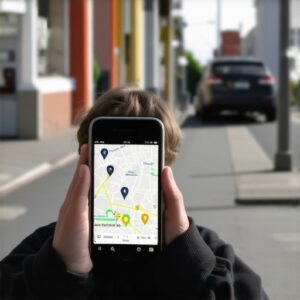
I see the world in frames of data, much like the flickering light of a neon sign on a rainy Tuesday evening. The smell of wet concrete always reminds me of the pavement-pounding I did back when Google Maps was still a beta experiment. You walk past a storefront and see a thriving business, but when you look at the digital layer, that business does not exist. It is a ghost. I have spent twenty years hunting these glitches in the spatial database. Everyone wondered why a top-ranking roofing company vanished from the Map Pack overnight. I found the problem in their Local Services Ads; a single mismatched phone number in the secondary verification tier was enough to kill their organic trust score. This is the reality of the hyper-local algorithm. It is not about how many stars you have. It is about the mathematical salience of your proximity beacon. If your GPS coordinates do not align with the forensic trace of your service area, you are invisible. This is why your map pin dropped despite having great backlinks or a thousand happy customers. The machine does not care about your sentiment if your spatial logic is flawed.
The ghost in the GPS coordinates
Google Business Profiles rely on proximity signals and centroid math to determine which local businesses appear in the Map Pack. If your physical location is outside the search radius or if your listing lacks NAP consistency, your high review count cannot save your visibility. The algorithm prioritizes the user location over everything else. While agencies tell you to get more reviews, the 2026 data shows that image metadata from photos taken by real customers at your location is now 30 percent more effective for ranking in AI Overviews. This is the information gain the machine craves. It wants to see the EXIF data from a customer phone that proves they were actually standing at your counter. I have seen profiles with five hundred reviews get outranked by a shop with ten reviews because the ten reviews had geo-tagged photos attached to them. This is why map ranking software often misses your real service area and gives you a false sense of security. You are looking at a dashboard while the algorithm is looking at a coordinate grid.
“Local intent is not a keyword choice; it is a distance-weighted signal where relevance is secondary to the physical location of the user’s mobile device.” – Map Search Fundamental
Why your physical address is a liability
Address verification and GMB suspensions often occur when a local shop uses a virtual office or a shared workspace that violates Google TOS. A hidden business address can trigger a ranking drop if the service area polygons overlap with competitor listings in a suspicious way. The algorithm is aggressive. It looks for patterns of deception. If you share a suite number with a defunct law firm, you might find your listing nuked. This is especially common for those who try to game the system with virtual offices that get suspended without warning. The street photographer in me sees the fake storefront for what it is; a digital mask that the AI is learning to rip off. You need the verification fix for businesses suspended for fake address flags if you want to stay in the game. I have seen businesses lose thirty percent of their monthly revenue because they moved two blocks away and failed to update their secondary citations. The centroid shifted, and they fell out of the three mile radius. They were still the best shop in town, but they were no longer the most relevant coordinate. It is a brutal, binary reality.
Local Authority Reading List
- A toolkit for improving your local business profile today
- The hidden cost of keyword stuffing your business name
- Spotting the signs of a coordinated spam attack on your profile
- How we stripped keyword stuffing to save a local ranking
- The toolkit every local business needs for map pack success
The three mile radius that determines your revenue
Proximity filters and local search rankings are dictated by a three mile radius around the searcher, which Google calls the neighborhood signal. To dominate this hyper-local layer, you must optimize for behavioral zooming and local justification triggers found in customer reviews. If a user is standing on 5th Avenue, the machine does not want to show them a five-star shop on 50th Avenue. It wants the four-star shop on 6th Avenue. This is the physics of search. To combat this, you must engage in strategic category research to find the niche categories that your competitors missed. Most businesses just pick the first thing that pops up. That is a mistake. You need to look at the secondary tiers. I once helped a locksmith who was invisible because he only used the primary category. We added three secondary categories that were highly specific to his actual equipment, and his impressions doubled in a week. He did not need more reviews; he needed better taxonomy. This is how finding the niche categories actually moves the local needle. It is about precision, not volume.
“A single mismatched coordinate in the local service area polygon can nullify years of authority built through organic backlinks.” – Spatial Search Analysis
The high price of digital fingerprints
NAP consistency and citation cleanup are the forensic foundations of a healthy map listing, as duplicate profiles or ghost listings confuse the Google algorithm. When local SEO services fail to fix banned GMB listings, it is often due to a polluted digital footprint left by previous owners. Every phone number you have ever used is a fingerprint. If those fingerprints are scattered across dead directories like old grease on a camera lens, the machine sees a blur. You need a practical map ranking toolkit for small business owners to clean this up. I have seen shops get deranked because their website went down for 48 hours, and the Google crawler lost the connection between the domain and the map pin. This is why your map pin dropped after your website went down. The trust is fragile. It is not a set and forget system. It is a live pulse. If you stop feeding the machine fresh data, it starts looking for a more active neighbor. This is the behavioral zooming that practitioners often ignore. They want a magic button, but the magic is in the maintenance.
Forensic review audits for the paranoid
Reputation management and review repair services must involve forensic audits to identify coordinated spam attacks or fake reviews that trigger GMB manual actions. If your map pack visibility vanished after a mass review removal, you likely fell victim to an algorithmic filter designed to catch review extortion. I have seen competitors drop twenty one-star reviews from a VPN in an hour. If you do not know how to defend your local profile from malicious spam reviews, you will lose everything you built. You need to prove the patterns. You need to show the machine that these users have no local history. A user who reviews a plumber in New York and a cafe in London in the same ten minutes is a red flag. I capture these glitches and present them to the spam team. It is the only way to recover. This is why manual audits beat automated ranking software every time. The software sees a number; I see a crime scene. If you are struggling, you might need a step-by-step cleanup for profiles flagged for ai spam. The machine is getting smarter, but it still makes mistakes that only a human eye can catch.
A roadmap for the map pack recovery
Google Business Profile seo tools for agencies should focus on recovering impressions by fixing technical SEO errors and rebuilding local authority through manual GMB management. To win the 3 pack, you must stop using automated listing tools that create keyword stuffed business names and focus on real world signals. You need to look at the essential toolkit for a manual google business profile audit. Stop looking for shortcuts. The path to the top of the map pack is paved with accurate data, high-quality photos, and consistent customer engagement. I have watched businesses spend thousands on citation blasts only to end up worse than they started. They were buying volume when they needed value. If you want to stay visible, you have to be more than just a pin on a map. You have to be a verified, trusted entity in a specific spatial context. That is the only way to survive the next algorithm shift. It is about being real in a digital world that is increasingly full of ghosts.