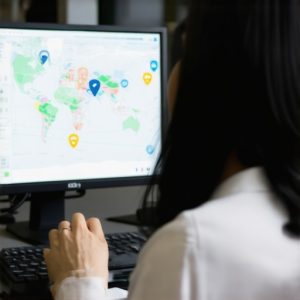
The scent of peppermint and the dry, dusty aroma of old paper always remind me of why I fight for the shop owners on Main Street. As a veteran who has spent decades watching the gears of the local economy turn, I find nothing more irritating than a national chain or a phantom lead-generator pretending to be a local pillar. My desk is covered in maps and city charters, documents that prove who actually exists in our physical world. I view every Google Business Profile as a proximity beacon. When that beacon is fake, the entire spatial database of our community is corrupted. I despise the trend of address rentals where a business owner thinks a monthly check to a coworking space buys them the right to occupy the Map Pack. It does not work that way anymore.
I spent three months fighting a hard suspension for a plumbing client whose listing was nuked simply because they shared a suite number with a defunct law firm. Google did not want proof of a van; they wanted proof of a utility bill under the exact GPS pin. This plumber was real, but his reliance on a shared executive suite made him look like a ghost in the eyes of the algorithm. We had to dig through layers of lease agreements and photograph the physical directory in the lobby just to move the needle. It was a war of paperwork and digital forensics that most business owners are not prepared to win.
The ghost in the GPS coordinates
Virtual offices trigger suspensions because they lack a permanent, exclusive physical presence that Google can verify through third-party data. The local algorithm uses spatial triangulation and utility data to confirm that a business is a tangible entity. If your address is flagged as a known coworking space or mail drop, your trust score drops to zero immediately. You must understand that the algorithm is no longer just looking at your name and phone number. It is looking at the mathematical weight of your location. It calculates the probability that a business is actually operating behind that door based on signals from mobile devices, Wi-Fi networks, and government records. When you use a virtual office, you are fighting against the physics of the local search ecosystem. Most google business profile recovery services will tell you that the first step is admitting that the address is the problem. You cannot rank a ghost. You cannot build authority on a foundation of rented air. If you want to stay in the Map Pack, you must prove you are a brick-and-mortar reality or a legitimate service area provider.
The algorithm uses a process called centroid theory. It determines the center of a business district and measures how far your pin sits from that heart. If your pin is placed at a Regus or a WeWork, the algorithm sees a cluster of five hundred businesses at the exact same latitude and longitude. This creates a data collision. Google hates collisions. It wants unique signals. When it sees five hundred businesses in one suite, it assumes the majority are spam. This is why verification failed here is how to prove your physical office exists is such a common search term for those trying to bypass the system. You are not just a name; you are a coordinate. If those coordinates are shared with a hundred other ‘professionals’ who never actually sit at a desk there, the local filter will hide you. It is a survival mechanism for the search engine to prevent the Map Pack from becoming a directory of empty rooms.
“Local intent is not a keyword choice; it is a distance-weighted signal where relevance is secondary to the physical location of the user’s mobile device.” – Map Search Fundamental
The three mile radius that determines your revenue
Proximity is the most powerful ranking factor in the local algorithm, often overriding review counts and website authority. If your business is physically located in a virtual office, your proximity signal is fundamentally broken because Google recognizes the address as non-residential and non-commercial for your specific niche. I have seen why local plumbers lose half their leads just three miles from the office and it usually comes down to the quality of the location data. The algorithm draws a polygon around your verified address. Within that polygon, you are king. Outside of it, you vanish. If that address is a virtual suite, the polygon shrinks because the trust signals are weak. You are essentially competing with one hand tied behind your back. The machine knows that a ‘virtual’ presence does not result in a high-quality user experience. People want to visit a shop or have a technician arrive from a local depot, not a mail slot in a skyscraper.
We also have to consider the behavioral zoom of the user. When a customer searches for a service, Google looks at the historical data of that physical location. Has anyone ever actually checked in there? Do the GPS logs of mobile users show foot traffic? If a virtual office shows no foot traffic for your business name, the algorithm concludes you are not there. This is why the map ranking strategy for service businesses that dont have a physical lobby is so critical. You have to pivot to a Service Area Business (SAB) model. You have to hide the address and define your territory. Trying to act like a storefront when you are a virtual entity is a fast track to a manual action. I have used seo services to remove google manual action for many clients who thought they could trick the system. The system does not get tricked; it just waits for you to make a mistake.
Local Authority Reading List
- The reinstatement checklist for profile recovery
- How to dominate the map pack without renting a physical office
- Why your business profile suspension appeal failed
- GMB category research for market gaps
- The hidden schema fix for service areas
Why your physical address is a liability
A mismatched address or a virtual office location acts as a negative trust signal that can trigger immediate suspensions. The Google Business Profile system cross-references your NAP data (Name, Address, Phone) against thousands of other directories and government databases to ensure citation consistency. If your address on your website points to a virtual office but your business license is registered to your home, the algorithm detects a conflict. This is why local seo services to fix banned gmb listing focus so heavily on data cleanup. You cannot have three different versions of your reality floating around the web. The algorithm is looking for a singular, verifiable truth. When you change your address to a virtual office to ‘rank’ in a new city, you often trigger a ranking loss after address change because you have severed the historical trust of your previous location.
I have audited hundreds of profiles where the owner thought an aggressive location page strategy would save them. Instead, it led to 3 messy seo errors that keep your shop out of the local map pack. One of those errors is creating pages for cities where you have no physical presence. If you use services to fix mismatched business address and phone number data, you are basically doing digital housekeeping. You are scrubbing the ‘virtual’ out of your profile. The algorithm is smart enough to know the difference between a real warehouse and a mailbox at a UPS store. It uses Street View data. It uses AI to read the signs on the door. If the AI sees a building with a ‘Regus’ sign but your profile says ‘Smith Plumbing,’ it knows you are lying. The machine is visual now.
“A business without a verifiable physical presence is a statistical anomaly that the proximity algorithm is designed to prune.” – Geographic Search Review
The forensic trace of a service area
Service Area Business (SAB) profiles are the only legitimate way to rank without a physical storefront, provided you follow the strict guidelines for territory definition. If you have been hit by seo services to fix gmb issues caused by virtual office or coworking space, the solution is usually to convert your profile to an SAB. This removes your address from the public view and tells Google that you travel to your customers. This is the only way to survive if you do not have a lobby and a sign. However, you must be careful. If you set your service area too wide, you will face recovering your map position after changing your service area boundaries issues. You cannot claim an entire state. You have to be realistic. The algorithm calculates your service area density. If you are a one-man shop claiming a 200-mile radius, the algorithm flags you for aggressive location page strategy penalties. It knows you cannot physically serve that area efficiently.
To truly win, you need to use schema and structured data to tell the story of your service area. This is where the schema mistakes that make your business invisible to local search come into play. Your website should have LocalBusiness JSON-LD that explicitly lists your service area polygons. This matches the data on your Google profile. When the two systems align, trust is built. You can use tools to find gmb categories and keywords that are specific to your actual neighborhoods. Do not chase the high-volume ‘city’ keywords if you are ten miles away. Chase the ‘near me’ signals in your immediate vicinity. This is how you build a fortress around your real location. Use services to monitor and prevent future gmb suspensions to keep an eye on your data health. One rogue edit from a competitor can send you back into suspension purgatory.
Surviving the reinstatement war
Fixing a suspended profile requires a total audit of your legal documentation and a complete removal of all virtual office references. You need to gather your articles of incorporation, your utility bills, and your business license. Everything must match your profile name and address exactly. If you are using a virtual office, you must change the address to your home or a real commercial space before you appeal. Most people fail because they try to appeal while the lie is still active. You have to tell the truth. If you moved, use ranking in two cities the migration strategy that works to transition your authority properly. Do not just flip a switch and hope for the best. The algorithm remembers your old location and it will compare it to the new one.
Once you are reinstated, the work is not over. You need to rebuild your star rating and your local relevance. I often recommend how to rebuild your star rating after a review sweep as a guide for businesses that lost their momentum during a suspension. You need fresh, local signals. You need customers to take photos of your work at their homes and upload them to your profile. This is the information gain that Google craves. A photo of a truck in a driveway with a GPS tag is worth more than a thousand keywords. It proves you were there. It proves you are real. This is the future of local search. It is not about who has the most backlinks; it is about who has the most physical proof of existence in the real world.
Local Authority Reading List
- The map spam fighting checklist for agencies
- 7 local ranking tools for the truth about position
- The spreadsheet tactic for NAP synchronization
- What your local SEO audit is missing
- The 20-minute Google Maps SEO 2026 audit
The local map is a living, breathing representation of our town. When we allow virtual offices and phantom listings to take over, we lose the essence of what makes local business special. I will always stand with the owner who has grease on their hands or a shop to sweep every morning. If you find yourself on the wrong side of a suspension, do not panic. Fix the data, prove your existence, and get back to serving your neighbors. The map will reward those who are truly present. It is time to stop playing games with addresses and start building a real legacy in your community.