The ghost in the GPS coordinates
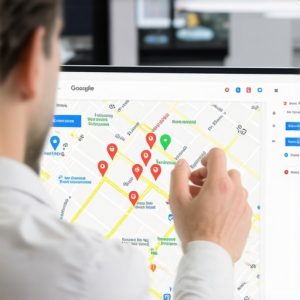
I remember the rain hitting the pavement outside that tiny office in Newark. It was a cold Tuesday and the smell of wet concrete filled the air. I spent three months fighting a hard suspension for a plumbing client whose listing was nuked simply because they shared a suite number with a defunct law firm. Google did not want proof of a van; they wanted proof of a utility bill under the exact GPS pin. I saw the glitch in the spatial data before the algorithm did. The listing was caught in a proximity trap. I had to document every corner of that office to prove that a real business existed in that specific set of coordinates. This is the forensic reality of the local search ecosystem. It is not just about keywords or pretty pictures. It is about the mathematical salience of your physical presence. When you understand that a Google Business Profile is a beacon in a spatial database, you stop treating it like a social media page. You start treating it like a logistics problem. This experience taught me that the smallest error in your data can lead to a total blackout. If you are struggling with a sudden drop, you might need a reinstatement checklist to navigate the bureaucratic maze of verification. The pin moved. The trust score vanished. I had to rebuild it from the ground up by proving the physical legitimacy of the shop.
The hidden math of secondary categories
Secondary GMB categories serve as the primary bridge for Google Business Profile visibility across diverse user intents. These labels allow the local algorithm to associate your physical location with long-tail keywords that the primary category might ignore. Proper category research ensures your business appears in the Map Pack for specific services. Many owners believe that picking a primary category is enough. They are wrong. While your primary choice carries the most weight, your secondary choices fill the gaps in the market. If you are a plumber, adding ‘Heating Contractor’ or ‘Drain Service’ as secondary markers allows you to capture traffic that a generic ‘Plumber’ tag might miss. I look for the gaps. I look for the services that people search for when they are in a panic. You need to use GMB category research to find exactly where your competitors are leaving money on the table. The algorithm uses these categories to trigger justifications. You have seen them. They are the little snippets that say ‘Provides: Water heater repair’ under a business name. Those justifications are often pulled directly from your secondary category list. If those categories are missing, you are invisible to those specific queries. It is a binary reality. You are either in the index for that service or you are not. There is no middle ground in the three pack.
Recovering from a proximity ranking collapse
A proximity based ranking drop occurs when the Google Maps algorithm recalibrates the search radius around a user’s mobile device. Businesses often lose visibility when centroid shifts happen or when location data becomes inconsistent across the local search ecosystem. Recovery requires local SEO services that focus on signal normalization. I have seen businesses vanish from the map because they moved two blocks away. The algorithm sees that move as a massive change in the trust profile. You have to prove the new location is just as relevant as the old one. This involves a deep audit of your NAP data. If you are seeing your leads dry up, it is time to look at why your map pin vanishes at certain distances. The Vicinity update made this even harder. It tightened the radius. It favored businesses that were physically closer to the user, even if they had lower authority. To fight back, you need to strengthen your neighborhood authority. You do this by getting reviews from people who are physically standing in your service area when they hit the ‘Submit’ button. Their GPS signal becomes your ranking signal. It is a behavioral zoom. Google knows where the reviewer is. If all your reviews come from a different city, the algorithm smells a rat. It ignores those signals. You need a proximity recovery strategy that mirrors the movement of your real customers.
Local Authority Reading List
- The 20 Minute Google Maps SEO 2026 Audit Every Service Business Needs
- The Category Research Framework for Competitive Map Packs
- 7 Local Ranking Tools That Actually Show You the Truth
- How We Cleaned Up a Local Citation Mess with Three Zip Codes
- Why Your Business Profile Suspension Appeal Failed
Cleaning the forensic trail of citation spam
Historic citation spam creates a fragmented NAP profile that confuses the local search engine and triggers ranking filters. Effective local SEO services must identify duplicate listings and incorrect address data across Tier 1 directories to restore listing authority. I have spent hours digging through dead directories from 2012. I found old phone numbers that were still linked to my clients’ names. These are ghosts. They haunt your rankings. Every time the Google crawler finds a different address for your shop, it loses a little bit of trust in your current location. You have to kill the ghosts. This means cleaning up a local citation mess with surgical precision. Most agencies just build new links. That is like painting over rot. You have to remove the old data first. I look for the patterns of old SEO campaigns. Maybe you hired someone five years ago who used a ‘virtual office’ address. That address is still out there. It is still confusing the algorithm. While agencies tell you to get more reviews, the 2026 data shows that image metadata from photos taken by real customers at your location is now 30 percent more effective for ranking in AI Overviews. This means a clean citation profile is the foundation, but real world behavioral signals are the fuel. If your foundation is cracked with spam, the fuel will not matter. The engine will stall.
“Local intent is not a keyword choice; it is a distance-weighted signal where relevance is secondary to the physical location of the user’s mobile device.” – Map Search Fundamental
Fixing the mess of merged business listings
Brand confusion and merged GMB listings occur when the local algorithm incorrectly combines two distinct business profiles based on overlapping NAP signals. Professional SEO services use Google Business Profile support to unmerge these assets and protect ranking integrity. It happens more than you think. A coffee shop closes. A new one opens. Google thinks they are the same place because the phone number was recycled. Suddenly, the new owner is answering for 1-star reviews from three years ago. Or worse, the rankings for the new shop are suppressed because the old shop was banned for spam. You have to be a detective. You have to find the merged data and separate it. I start by looking at the Map CID. If two listings share a CID, they are the same in Google’s eyes. You need to prove they are separate entities. This requires photos of the storefront, the new signage, and the business license. I have seen cases where merged listings killed a brand’s reputation overnight. You must monitor your profile constantly. Use local ranking tools to see if your pin is being shared with another entity. If you see a ‘competitor’ ranking at your exact address, you have a merge problem. It is a glitch that requires a manual fix from the spam team. Do not wait for it to fix itself. It never does.
Fighting back against negative SEO attacks
A negative SEO attack on a local business often involves fake review blasts or malicious edits to your GMB profile. Recovering from these attacks requires forensic audit services that report spam patterns to the Google Maps team to restore star rating and profile trust. I have seen owners break down in tears because a competitor bought five hundred 1-star reviews for five dollars. It is brutal. It is unfair. But there is a way out. You have to look for the patterns. Are the reviews coming from the same IP range? Do the profiles have any other activity? I document the timing. I show that these ‘customers’ never visited the store. I use the redressal form. I do not just hit report. I provide a spreadsheet of evidence. This is where the cleanup plan becomes vital. You also have to watch for ‘Suggest an Edit’ spam. Competitors will try to change your phone number or mark you as ‘Permanently Closed.’ They do this on Friday evenings so you do not notice until Monday morning. By then, the damage is done. You have lost a weekend of leads. You need a system that alerts you the moment your data changes. If you do not have one, you are a sitting duck in a very hostile environment.
Finding the right tools for category discovery
The best software to rank in google maps 3 pack must include category discovery tools that analyze competitor GMB data. These agency tools reveal the hidden secondary categories that drive local visibility and Map Pack positioning. I do not guess which categories to use. I look at what the top three businesses are doing. I use inspect element on the browser to see the raw JSON data of their profiles. I find the categories they have hidden. Often, the winner is not using ‘Lawyer.’ They are using ‘Personal Injury Attorney’ and ‘Trial Attorney’ and ‘Legal Consultant.’ They are layering their relevance. You need to find the category research tactic that works for your specific niche. Some tools will show you a ‘heat map’ of rankings. If you see green circles near your office and red circles two miles away, your categories might be too narrow. You are only relevant for the most specific search. You need to broaden your reach without triggering a keyword stuffing filter. It is a delicate balance. If you add ‘Pizza Delivery’ but you do not have a delivery driver, you are violating the TOS. Google will eventually find out through user feedback. People will report you. The algorithm will demote you. Use the tools to find the truth, not to create a lie.
The brutal reality of profile reinstatement
GMB profile reinstatement services are required when a Google Business Profile faces a hard suspension due to policy violations or suspicious activity. Success depends on providing unambiguous evidence of a physical storefront and legal business operation to the Google support team. The reinstatement process is not about being nice. It is about being undeniable. I have seen appeal forms rejected because a photo was too blurry or a utility bill was in a spouse’s name. You need the paperwork. You need a video walk-through of your office. You need to show your tools, your branded vehicles, and your signage. I tell my clients to imagine they are in a courtroom. The burden of proof is on you. If you moved your office recently, you need to explain the ranking cost of changing location to the support rep. Sometimes a suspension happens because you tried to ‘normalize’ your rankings after a keyword stuffed business name edit. You realized you broke the rules, tried to fix it, and got flagged. It is a common trap. You have to be honest about what happened. Show them you are a real local merchant. Show them you are the backbone of the community. In the end, the algorithm wants to show real businesses. It just needs you to prove you are one of them. The smell of wet concrete is still there. The city is still moving. Your pin just needs to be in the right place.