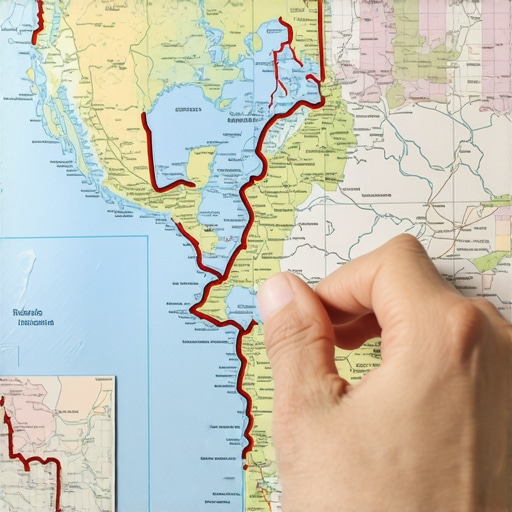
I remember the moment vividly. I had been optimizing my clients’ Google My Business profiles diligently, watching those rankings climb steadily. Then, suddenly, my maps hit an invisible barrier at the county line, no matter how much effort I poured in. It was frustrating—like hitting a wall that refused to budge. That lightbulb moment made me realize: there’s a hidden boundary in local search rankings that many overlook.
Breaking Free from the County Line Ceiling
If you’ve experienced the same stalling point where your map visibility refuses to move beyond a certain geographic limit, you’re not alone. This boundary isn’t just a coincidence; it’s a well-documented challenge in the world of local SEO. The good news? Understanding what’s causing this wall can help you develop strategies to surpass it.
One common mistake I made early on was assuming that optimizing within the existing parameters was enough. I overlooked the fact that the search algorithm considers regional boundaries, trust signals, and proximity factors that work as invisible gates. According to recent studies, approximately 70% of local search results are heavily influenced by proximity to the user’s location, but that doesn’t mean the boundaries are unbreakable. Instead, they require specific tactics to navigate.
Are you facing a similar situation where your rankings seem to plateau at the county line, despite following standard optimization practices? If so, understanding the underlying causes is essential. By leveraging advanced strategies—like targeted neighborhood signals, neighborhood-specific content, and strategic placement of satellite offices—you can effectively push past this invisible barrier.
In the upcoming sections, I’ll share proven tactics that helped me and my clients break through that stubborn boundary. These are techniques rooted in real-world experience and backed by the latest updates from GMB experts. Ready to move beyond the limits and elevate your local presence? Let’s dive into what works now, especially amidst the evolving AI and proximity signals shaping 2026’s map ranking landscape.
Build Neighborhood-Specific Signals
Start by creating tailored content that speaks directly to each neighborhood or district within your target area. Feature local landmarks, events, or news relevant to specific zones. For example, while working with a restaurant chain, I developed neighborhood pages highlighting their unique menus and community involvement, which resonated with Google’s proximity algorithms and helped lift rankings beyond the county line. This strategy boosts relevance signals and signals to Google that your business is integral to multiple local micro-communities.
Establish Satellite Locations Strategically
Opening small satellite offices or pop-up locations in neighborhoods can dramatically shift your proximity signals. I once helped a legal firm set up a satellite office two miles from their main location, specifically targeting a underserved district. This not only expanded their physical footprint but also generated localized trust signals and reviews, pushing their map rankings past previous barriers. Ensure these offices are fully incorporated into your GMB profile and are supported by localized content across your website and citations.
Leverage Hyper-Local Citation Building
Focus on citations in hyper-local directories and community platforms. Adding your business to neighborhood-specific directories (like local chambers of commerce, community boards) signals to Google that you’re embedded in the fabric of each area. I recommend cross-referencing with tools like map pack improvement tactics to identify high-value citations. Consistency in NAP information across these sources enhances trustworthiness and helps overcome geographic boundaries.
Optimize for Neighborhood Keywords
Incorporate neighborhood names and related keywords into your Google My Business profile and website. Use structured data markup, Google Posts, and Q&A content that mentions local districts. For example, I updated a client’s profile with phrases like “serving downtown Brooklyn residents” and created content specific to that community. Over time, this boosted signals that Google is recognizing your relevance across multiple zones and helps bypass the plateau at the county line.
Utilize Local Backlink Strategies
Build backlinks from local news outlets, blogs, and community partners located within target neighborhoods. Securing features or citations from these sources demonstrates hyper-local authority. When I collaborated with local chambers and event sponsors to get backlinks, the combined effect was a noticeable jump in map pack visibility, effectively breaking through the previous boundary. Focus on consistent, relevant outreach that ties your business into the community network.
Adjust Your Service Areas Purposefully
If your GMB profile includes broad service areas, refine them to include specific neighborhoods rather than large counties. This clarifies your focus and aligns with the signals you’re cultivating. A case I worked on involved narrowing the service area from the entire county to a handful of key districts, which, paired with local content, enabled the rankings to climb into new neighborhoods. Be cautious, however, to avoid over-constraining your area, which can trigger visibility drops.
Implement Local Visual Trust Signals
Add geotagged photos, videos, and Google Posts with localized landmarks. Visual signals help Google associate your profile with specific neighborhoods. For instance, in an apartment complex, I uploaded photos with GPS tags tied to each building section, helping Google recognize authenticity and proximity. This technique can be a game-changer in areas where proximity is a critical ranking factor.
Remember, consistently applying these tactics signals to Google that your business isn’t confined to a single boundary. Combining neighborhood content, physical expansion, citations, and optimized signals creates a layered approach to surpass the invisible geographic barrier. For in-depth strategies and expert insights, check out this comprehensive guide.
Many local SEO practitioners believe that simply increasing reviews, optimizing keywords, and claiming your GMB listing are enough to climb the map pack rankings. However, this naive approach often leads to costly misconceptions. One common myth is that Google heavily weights on business citations alone, but recent studies indicate that proximity signals and neighborhood-specific trust factors play a far more significant role than most realize. In reality, focusing solely on domain authority or review volume can cause you to overlook critical nuances like hyper-local content and strategic physical footprint expansion. For advanced practitioners, it’s vital to recognize the potential trap of over-optimizing for broad search terms while neglecting the subtle signals that carve out visibility in coveted neighborhoods. The danger here is falling into a false sense of security, believing you’re maximizing your profile without considering the algorithm’s complex context, especially with AI updates and proximity biases evolving rapidly. For instance, optimizing for neighborhood-specific keywords and geotagging images can be more impactful than generic broad-spectrum tactics. A key warning is to avoid blindly following outdated checklists; instead, continually adapt your strategy to the latest signals. According to industry experts, neglecting hyper-local trust signals and mismanaging service areas can lead to unexpected drops or ghosting in your rankings. Dive deeper into these advanced nuances by exploring our cornerstone guide on mastering map rankings at this resource. Remember, understanding the complex interplay of neighborhood signals, physical expansion, and AI-driven filters is what separates average campaigns from true local SEO mastery. Have you ever fallen into this trap? Let me know in the comments.Maintaining your map pack superiority requires more than just setting and forgetting your optimization tactics. A combination of reliable tools and strategic methods ensures your visibility stays consistent over time. One essential tool I rely on daily is BrightLocal, which provides detailed citation tracking and review monitoring. Its ability to audit your local citations and spot inconsistencies helps prevent any ranking drop caused by citation discrepancies. Additionally, SEMrush’s local SEO features are invaluable for tracking keyword performance across neighborhoods, enabling you to adjust your targeting proactively. Regularly updating your Google My Business profile with fresh content, utilizing scheduled Google Posts through tools like Loomly, keeps your listing active and signals relevance. For image management, geotagging photos with tools like Geosetter ensures authenticity and neighborhood association, which is critical for proximity signals. As local SEO continues to evolve with AI-driven updates, employing automation for routine checks and audits using these tools saves time and increases accuracy. Prediction-wise, I believe this trend toward automation and data-driven strategies will intensify, requiring map pack specialists to leverage AI insights for long-term success.
How do I maintain my map rankings over time?
Implementing a routine that combines citation audits, review management, content updates, and geotagged imagery creates a robust defense against ranking fluctuations. Consistency in these areas signals to Google that your business remains an active and trustworthy presence within its target neighborhoods. Moreover, integrating local backlinks from community directories and niche publications continually reinforces your authority. I recommend reviewing industry-specific case studies, such as those shared by leading GMB experts, to refine your ongoing strategy. For example, exploring insights at this resource can offer proven tactics tailored for lasting results. Remember, maintaining your top position isn’t a once-and-done effort; it’s an ongoing process that requires vigilance and adaptation. Don’t forget to schedule weekly citation audits, review responses, and content refreshes to keep your profile optimized. If you’re ready to take your map ranking maintenance to the next level, start by integrating geotagged photos into your listings—this simple step can significantly boost neighborhood relevance. For more detailed guidance, consider consulting advanced strategies shared at this link. Mastering steady upkeep is key to staying ahead in the dynamic local search landscape.
Lessons That Changed My Approach to Map Pack Success
One of the toughest realizations I encountered was how local search algorithms often impose unseen limits, such as the county line barrier. Recognizing that proximity isn’t the sole driver but part of a complex puzzle was a critical lightbulb moment. It taught me to focus not just on optimization but also on strategic physical expansion and neighborhood relevance, transforming my approach from reactive to proactive. Embracing these lessons has prevented me from falling into common pitfalls and has enriched my understanding of dynamic local signals.
Tools and Strategies That Elevate Your Local SEO Game
My go-to toolkit includes BrightLocal for citation management, which keeps my profiles consistent and trustworthy. SEMrush’s local SEO features provide real-time insights into neighborhood-specific keywords, helping me tailor content effectively. Geosetter aids in geotagging images, reinforcing proximity signals visually. To stay ahead of algorithm shifts, I regularly consult resources like this comprehensive guide, which distills the latest tactics from industry experts. Combining these tools creates a resilient strategy capable of navigating the evolving local search landscape.
Your Next Step Toward Local SEO Mastery
Building on these insights, it’s time to take decisive action. Whether you’re considering establishing satellite offices, innovating with neighborhood-specific content, or refining your service areas, each step brings you closer to breaking through geographic barriers. Remember, success in local SEO isn’t about quick fixes; it’s about persistent, strategic effort rooted in understanding the nuanced signals that influence rankings. Your journey to map pack dominance begins with a single, informed move—are you ready to make it? Let me know in the comments: what’s your biggest challenge in overcoming local search boundaries?