The appeal strategy for reinstating a suspended Google listing
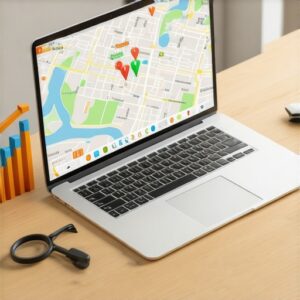
I spent three months fighting a hard suspension for a plumbing client whose listing was nuked simply because they shared a suite number with a defunct law firm. Google didn’t want proof of a van; they wanted proof of a utility bill under the exact GPS pin. This is the reality of the hyper-local layer. When you manage a fleet of service vehicles, you view every Google Business Profile as a dispatch node. When that node goes dark, the flow of revenue stops immediately. This is not about keywords or meta tags. This is about the mathematical weight of physical existence in a spatial database.
The logic of a hard suspension
Google Business Profile suspensions occur when the algorithmic trust score falls below a threshold, often triggered by inconsistent NAP data, virtual office footprints, or suspicious edit patterns. The system is designed to protect the integrity of the Map Pack from fraudulent actors. If you are using a virtual office or coworking space, you have already flagged your entity for manual review. The algorithm looks for a forensic trace of your business. This includes your Utility Bill, your Business License, and your Physical Signage. If these do not align with the GPS coordinates on the map, the listing is purged. Many owners try to fix this by creating a second listing, which is a fatal error. You must follow the proven path to reinstating a suspended google maps profile instead of complicating the data graph with duplicate entities. The logistics of a recovery require you to prove that your Point of Sale data matches your physical footprint.
Why your physical address is a liability
Location data integrity is the foundation of the Map Pack ranking system, where shared suite numbers or coworking spaces create entity ambiguity that leads to listing removal or ranking suppression. Google perceives a shared address as a high-risk signal for Map Spam. If ten different businesses are registered at the same suite, the Centroid Theory dictates that only one can be truly relevant. The others are often filtered or suspended. This is why the specific documentation needed for gmb reinstatement is so rigorous. You need to show photos of your office door, your street view, and your branded vehicles. I have seen listings fail because the door number was written in marker instead of being a permanent fixture. Google treats these signals as a dispatch system. If they cannot guarantee a user will find a real business at those coordinates, they remove the pin. This is why understanding why your map rank tanked after moving offices and how we fix it is vital for long-term survival.
“Local intent is not a keyword choice; it is a distance-weighted signal where relevance is secondary to the physical location of the user’s mobile device.” – Map Search Fundamental
The three mile radius that determines your revenue
Proximity-based ranking relies on the user GPS coordinates relative to the business centroid, making geo-fenced signals and customer check-ins vital for Google Maps visibility. The algorithm calculates the probability of service based on how far your workers travel. If you are a plumber, Google tracks the location of users who leave reviews. If all your reviews come from fifty miles away, but your office is in the city center, the spatial logic fails. You become a ghost listing. To fix this, you need a a practical map ranking toolkit for small business owners that focuses on local justification. This includes JSON-LD LocalBusiness attributes that specify your Service Area Polygon. You must ensure your NAP consistency is perfect across every directory. I recommend reviewing how to sync your business name across every local directory to prevent these distance-weighted signals from being diluted by bad data.
Local Authority Reading List
- The documentation you need to fix a suspended business profile
- Reporting the keyword stuffed profiles of local competitors
- The difference between real ranking tools and worthless rank trackers
- What GMB toolkits actually do for your local ranking
- Dealing with the fallout of a Google Business Profile suspension
Fighting the invisible spam war
Competitor spam attacks involve malicious review bombing and suggested edits to your Google Business Profile, requiring forensic audit tools and manual reporting to the Google spam team. Competitors will often use VPNs to drop dozens of fake 1-star reviews. They might also suggest that your business is permanently closed. To survive, you must be proactive. You need to be defending your local profile from malicious spam reviews on a daily basis. I use manual audits because software often misses the nuances of behavioral patterns. For example, if a competitor is keyword stuffing their business name, they are violating TOS and stealing your traffic. You should be reporting the keyword stuffed profiles of local competitors to level the playing field. This is a logistics battle for the limited space in the 3-pack. There are no participation trophies in the map pack ecosystem.
Recovery from the algorithmic shift
Google algorithm updates like Vicinity or Opossum recalibrate local ranking factors, often penalizing over-optimized anchor text or thin AI-generated content on the linked website. If your traffic dropped recently, it might not be your profile; it might be your site. Your website acts as the authority anchor for your map pin. If your site is full of why google is penalizing your ai-generated local pages, the profile will suffer. You must focus on removing unnatural content to restore your local search standing. I have seen rankings vanish because of spammy backlinks or malware. If your site is compromised, you should look into why a hacked website is the fastest way to lose local rankings. The logic is simple. Google will not send a customer to a site that is a security risk. Every technical error on your site is a friction point in the user journey.
“Local relevance is measured by the proximity of the user, the prominence of the entity, and the verification of the physical location through third-party data points.” – Local Search Intelligence Report
The forensic approach to profile restoration
Reinstatement requests must be supported by unfiltered evidence such as scanned utility bills, official tax documents, and video verification of the business premises. When you file an appeal, you are talking to a human investigator or a highly advanced AI classifier. They are looking for reasons to say no. Do not use automated tools to fill out your appeal. Use the essential toolkit for a manual google business profile audit to find every small error before you submit. This includes checking for why wrong phone numbers across the web are tanking your map rank. Even a single digit error in a directory can trigger a mismatch in the Knowledge Graph. You must be precise. The process is a verification loop. Once you prove you exist, you then have to prove you are useful. This involves how to restore map pack visibility after buying a new business or restructuring an old one. It is about restoring the flow of data. Only then will the pin return to the map. The logistics of search are cold and binary. You are either a verified provider or you are invisible. Use a repeatable checklist for staying visible in google maps every week to ensure you never fall into this trap again.