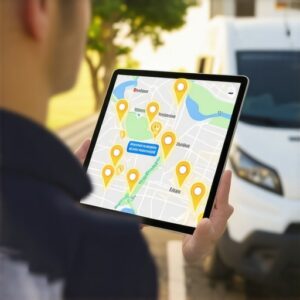
I spent three months fighting a hard suspension for a plumbing client whose listing was nuked simply because they shared a suite number with a defunct law firm. Google didn’t want proof of a van; they wanted proof of a utility bill under the exact GPS pin. This is the gritty reality of the hyper-local layer. When you walk down a city street, you smell the wet concrete and the exhaust from delivery trucks. Google’s algorithm tries to simulate this sensory awareness by measuring the density of local signals. If you dump machine-generated text into your business profile, you are essentially spray-painting a fake storefront over a real one. The algorithm notices the glitch. It sees the lack of local identifiers and the sterile phrasing that no actual resident would use. This leads to the sudden vanishing act of your map pin. If you are already in a crisis, seeking google business profile recovery services is the only way to reverse the damage caused by automated content triggers. Machine text lacks the grit of a real location. It does not know that the locals call the north side of town The Heights or that the parking lot behind the pharmacy is always full on Tuesdays. These small, hyper-local facts are the anchors that hold your listing in the Map Pack. Without them, you are just another data point floating in a digital void.
The sterile rot of machine generated descriptions
AI generated business descriptions fail because they lack the localized behavioral signals and GPS coordinate salience required to trigger the proximity algorithm. When you use generic models, you are replacing ai fluff with expertise that should have been there to prove your physical presence. The system looks for entity relationships between your address and the surrounding businesses. If your description reads like a generic Wikipedia entry for your industry, Google suspects you are a lead-gen spammer operating from a basement five hundred miles away. The math of local search is ruthless. It calculates the probability of your business being physically present based on the language you use. A real plumber mentions the specific pipe issues common in 1920s bungalows in the historic district. An AI mentions industry standards and customer satisfaction. The difference is the difference between ranking and being filtered out. You need the human touch to ensure your description serves as a proximity beacon rather than a red flag for the spam team.
“Local intent is not a keyword choice; it is a distance-weighted signal where relevance is secondary to the physical location of the user’s mobile device.” – Map Search Fundamental
The three mile radius that determines your revenue
A three mile radius shift in your map ranking often occurs when Google detects a mismatch between your stated service area and the localized keywords found in your profile. If your organic rankings stay stable while your map pack visibility vanishes, you are likely suffering from a trust score collapse. This often requires seo services to fix map pack loss while organic rankings stay stable to realign the spatial data. Google uses a centroid theory to determine where the center of your business power lies. If your description is filled with AI-generated keywords that do not match the local dialect or neighborhood names, the algorithm expands the suspicion filter. Suddenly, your pin only shows up when someone is standing in your parking lot. This is the proximity collapse. You need to verify your physical existence through every character of text you publish. This means mentioning local landmarks, cross-streets, and neighborhood specific services. When you move offices, the risk doubles. Many businesses find they need seo services to fix gmb ranking loss after address change because the new centroid does not match the old behavioral data patterns recorded by Google’s history of user pings.
Local Authority Reading List
- The Reinstatement Checklist for Suspended Listings
- Why Manual Audits Beat AI Software
- Finding Gaps in Your Local Market
- The 20 Minute Google Maps SEO Audit
- How to Report Map Pack Spam
Exposing the bot driven map listings in your service area
Bot driven map listings use high-volume keyword stuffing and AI descriptions to steal leads from legitimate businesses by mimicking local relevance. To fight back, you must engage in fighting local map spam with forensic precision. If a competitor has twenty locations and they all have identical, machine-generated descriptions, they are violating the TOS. You can use the redressal form to point out these patterns. Real local businesses have unique stories for every location. One shop is near the river; another is across from the high school. AI cannot replicate the specific atmospheric details of these different storefronts. If you are struggling to keep up, using the best toolkit to improve local search rankings helps you identify which competitors are using fake addresses and AI fluff to bridge the gap. Proximity is a physical law, but spam is a digital attempt to break that law. By keeping your data clean and your descriptions human, you build a trust score that machines cannot replicate. This trust is what allows you to survive a core update while the AI-dependent agencies see their clients vanish from the maps.
“The map pack algorithm prioritizes entity verification over textual content, making AI-driven genericisms a high-risk signal for automated suspension loops.” – Proximity Logic Digest
The forensic trace of a service area polygon
Google analyzes your service area polygon by comparing your claimed boundaries against the geographic entities mentioned in your customer reviews and business description. If you claim to serve a fifty-mile radius but your AI-written description only mentions the city center, you create a relevance gap. This gap is where your competitors will outrank you. You need google maps seo services for suspended profiles if your service area adjustments trigger a fraud flag. The algorithm is looking for consistency between your NAP (Name, Address, Phone) data and the behavioral traces left by your workers in the field. When a technician checks in at a job site using a mobile app, that creates a GPS signal. If your business description matches the neighborhood of that signal, your ranking strengthens. AI text cannot do this because it does not have access to your real-world dispatch data. It is a static lie in a dynamic database. To fix this, you must integrate your actual service history into your localized content strategy. This is how you rebuild trust after falling for the trap of spammy lead gen listings that used your brand name to farm calls.
Finding the gaps in your local market
Identifying local market gaps requires an audit of the primary and secondary categories your competitors have neglected in favor of high-volume keywords. Most business owners just pick the first category that fits. They use AI to write a description that hits that one category hard. This is a mistake. By performing deep gmb category research, you can find niche designations that have less competition but high local intent. Your description should then be hand-crafted to support these secondary categories. For example, a landscaper might find that ranking for outdoor lighting is easier than ranking for lawn care. The description should reflect this specific expertise with human stories about local projects. This is how gmb ranking toolkits work for savvy owners; they show you where the machine-generated competition is weak. You can then use tools to find gmb categories and keywords that the generic AI models completely miss. This level of detail is what separates a top-three ranking from a page-ten failure. The path to recovery involves cleaning up the mess left by automation and replacing it with the hard facts of your daily operations.