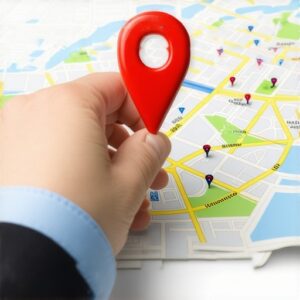
The documentation you need for successful GMB reinstatement
I spent three months fighting a hard suspension for a plumbing client whose listing was nuked simply because they shared a suite number with a defunct law firm. Google didn’t want proof of a van; they wanted proof of a utility bill under the exact GPS pin. This was not a simple clerical error. It was a proximity crisis. Every day that the listing stayed dark, the client lost thousands in emergency calls. I had to go into the trenches of the local algorithm to prove that this physical location was a legitimate beacon of service. We finally won because we understood that a Google Business Profile is not just a digital flyer. It is a spatial data point that requires forensic proof to exist. If you find yourself in the middle of a ranking freefall, you need more than just luck. You need a specific set of verified documents that satisfy the trust signals of the local search engine.
The paperwork that proves your physical existence
To achieve a successful GMB reinstatement, you must provide a valid business license, a utility bill in the business name, and photographic evidence of your permanent signage. Google uses these documents to verify that your location is a physical entity rather than a spam listing or a virtual office. Many owners try to shortcut this by sending a screenshot of their website. That will fail every time. The map algorithm is designed to filter out ghosts. I have seen countless businesses lose their visibility because they could not produce a lease agreement that matched their dashboard data. If you are struggling with a sudden removal, look at the reinstatement checklist to see where your data might be failing. You need a tax ID, a commercial insurance policy, and sometimes a photo of your desk inside the office. This is about establishing a footprint in the real world. Google trusts ink on paper more than pixels on a screen.
Why your utility bill is the ultimate proximity signal
A utility bill serves as the primary trust signal for local SEO because it connects a legal business entity to a specific physical address with high certainty. Google prioritizes electricity or water statements because these services are tied to the infrastructure of a building. This makes it nearly impossible for map-pack spammers to fake a location. I once audited a profile where the owner was using a residential address but claiming a commercial zone. The local algorithm caught the discrepancy in the utility metadata. When the address on the bill does not match the dashboard, the trust score hits zero. You might need services to restore trust signals if you have moved without updating your paperwork. The map pack is a dispatch system. It does not want to send customers to a vacant lot or a mailbox at a UPS store. If your bill is in a different language, you need a certified translation. Inconsistency is the fastest way to get a permanent ban from the local results.
“Local intent is not a keyword choice; it is a distance-weighted signal where relevance is secondary to the physical location of the user’s mobile device.” – Map Search Fundamental
The forensic trace of a service area polygon
Service area businesses must provide proof of their actual service territory through vehicle registrations, branded fleet photos, and job site invoices that match their stated boundaries. Google scrutinizes these signals to prevent businesses from claiming an unnaturally large radius that they cannot physically support. If you hide your address, you still have to prove you exist within the centroid of the city. I have seen agencies try to rank a roofer across three states from a single home office. The algorithm sees the lack of local signals and drops the impressions. You can use recovering your map position after changing your service area boundaries as a guide for correcting these territorial errors. Proximity is a math problem. If your van is never parked at the address you claim, the GPS data from customer reviews will eventually out you. You cannot hide from the behavioral signals of the users who interact with your listing. Real businesses leave a trail of data in their local area.
A toolkit for auditing your suspended map profile
A comprehensive GMB audit toolkit should include a NAP consistency checker, a secondary category analyzer, and a review sentiment auditor. These tools allow you to identify the specific technical errors that triggered a suspension or a ranking drop. Most small business owners rely on gut feelings, but the map pack is driven by data. You need to know if your secondary categories are conflicting with your primary service. If you are a plumber, do not list yourself as a general contractor just to get more reach. This creates a data mismatch. You can buy local seo tools for gmb that will show you exactly how your competitors are gaming the system. I use these tools to find the hidden categories that move the needle. A manual audit is always better than an automated report because it catches the nuances of local competition. You must look for keyword stuffing in your business name. It is a violation of terms that leads to immediate suspension. Stop trying to trick the engine and start feeding it the data it wants.
Local Authority Reading List
- The difference between real ranking tools and worthless trackers
- Why manual audits beat automated software
- How to verify your actual physical location
- The paperwork you need for suspicious address flags
- Cleaning up the localized metadata mess
The secondary verification tier for emergency services
Emergency service providers often face an additional layer of verification called Local Services Ads or LSA screening which requires background checks and license validation. This data feeds back into the organic map pack to establish a higher tier of trust for high-risk categories like locksmiths or HVAC. If you fail the secondary verification, your organic ranking will often suffer as well. The algorithm sees the failed verification as a lack of authority. I worked with a locksmith who vanished from the maps because their business insurance had expired. The LSA loop caught it and the organic pin dropped. To fix this, you need seo services to fix deranked website signals that align with your LSA data. Everything is connected. The phone number on your website must match the phone number on your profile and your insurance documents. Any deviation creates a friction point for the algorithm. High-risk niches are under constant surveillance for map spam. You must be cleaner than your competition to stay visible.
“Relevance is the degree to which a local business profile matches what someone is searching for; however, proximity remains the strongest filter in the local pack.” – Google Search Guidelines
Mathematical weight of local review sentiment
Review sentiment is a distance-weighted signal where the location of the reviewer relative to the business office provides a boost in local authority. Reviews from users who have a history of visiting that specific GPS coordinate are worth significantly more than generic feedback. This is why buying reviews from offshore farms never works. The algorithm knows the reviewer is not in your city. I have seen cases where a business lost all its reviews overnight because they lacked the behavioral data to back them up. You should focus on how to rebuild your star rating after a review sweep by asking real customers to take photos while at your shop. Image metadata from local photos is a powerful confirmation of your physical presence. It tells Google that a real person was actually at your location. In 2026, the quality of the image and its geotag will be more important than the text of the review. The map pack is becoming a visual and spatial database. Stop treating it like a directory. Start treating it like a physical presence that must be documented with every customer interaction.