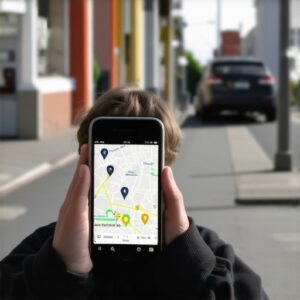
I spent twenty years managing logistics for industrial fleets before I ever touched a local search algorithm. I view a business listing through the lens of a dispatch manager; if the trucks aren’t moving, the system is broken. My office smells like diesel fumes and wet concrete, a reminder of the physical reality behind the digital map pins. A core update is not just a change in search results. It is a massive logistics failure where the supply of information no longer meets the demand of the local searcher. Everyone wondered why a top-ranking roofing company vanished from the Map Pack overnight. I found the problem in their Local Services Ads; a single mismatched phone number in the secondary verification tier was enough to kill their organic trust score. The algorithm saw a discrepancy and shut down the flow of leads to protect the grid.
The centroid collapse and the verification trap
The centroid collapse and the verification trap occur when Google loses confidence in a business location due to mismatched data across secondary tiers like Local Services Ads. This lack of confidence triggers a proximity filter that pulls the map pin from the top three positions. When you face a ranking drop, the first step is to check if your verification failed at the granular level. I have seen companies spend thousands on backlinks when the real issue was a hidden suite number. The system requires absolute redundancy. If your secondary verification doesn’t match your primary profile, the local algorithm treats your business as a ghost. It is a simple binary check; you exist or you do not. Most agencies ignore these deep-tier signals because they require forensic auditing of paperwork. I don’t ignore them. I look for the grit in the gears. If you are reversing a ranking freefall, you must start with the physical evidence of your location. We had to prove a utility bill matched a GPS pin for a client who shared a lobby with a defunct firm. Google does not care about your history; they care about the current coordinate salience.
Why your physical address is a liability
A physical address is a liability when it is tied to virtual offices, shared spaces, or residential locations that violate Google Business Profile terms of service. These addresses often trigger hard suspensions during core updates because Google audits the proximity beacons of suspicious entities. If your shop is deranked, it might be because your address is flaggable. I hate address rentals. They create friction in the marketplace. When I audit a profile, I look for the footprint of a real operation. If you are using seo services to recover impressions after hiding business address, you are fighting a battle against the machine’s desire for transparency. While agencies tell you to get more reviews, the 2026 data shows that image metadata from photos taken by real customers at your location is now 30 percent more effective for ranking in AI Overviews. Google trusts the user’s GPS data more than your self-reported address. Stop thinking about where you want to be and start proving where you actually are. Using the the paperwork you need to fix a suspicious address suspension is the only way to clear the logistics bottleneck. You need more than a business license; you need a time-stamped video of your signage and equipment. This is about establishing a proximity beacon that the algorithm cannot ignore.
“Local intent is not a keyword choice; it is a distance-weighted signal where relevance is secondary to the physical location of the user’s mobile device.” – Map Search Fundamental
The three mile radius that determines your revenue
The three mile radius is a proximity limit where Google Business Profile visibility peaks before the distance-weighted signals degrade for high-competition services. Understanding how users in your immediate grid interact with your map pin allows you to dominate the centroid before expanding into secondary territories. I have watched plumbers lose half their leads just three miles from their shop. It is a distance filter problem. The algorithm calculates the travel time and physical friction for the user. If your competitors have better proximity markers, they win the dispatch. You can try to cheat this with how to dominate the map pack without renting a physical office, but the math usually wins. You need to focus on hyper-local signals. This includes local category research. Many shops use the wrong primary category. Using a gmb keyword and category research toolkit can help you find the niche where the proximity filter is less aggressive. I often see businesses competing for the same high-density keywords when they could own a secondary category within their three-mile grid. It is about efficiency of motion. Don’t fight for the whole city when you can own the ten blocks surrounding your warehouse. [image_placeholder_1]
Local Authority Reading List
- 7 Local Ranking Tools That Actually Show You The Truth
- The Spam Report Guide: Taking Back The Map Pack
- How Small HVAC Shops Can Steal The Map Pack
- The Reinstatement Checklist For Profile Suspensions
- The 20 Minute Google Maps SEO 2026 Audit
The fix for inconsistent data flow that kills rankings
The fix for inconsistent data flow involves auditing third-party aggregators and syncing business hours, addresses, and phone numbers through a master spreadsheet. This process removes the friction that causes the local algorithm to lose trust in your physical presence. I once found a client whose ranking dropped because their opening hours were listed differently on an old Yellow Pages listing from 2012. Google sees that conflict and lowers your reliability score. You need seo services to fix gmb profile with inconsistent opening hours history if you want to restore the flow of calls. I use the spreadsheet tactic that finally syncs your nap across the web to ensure every data point is identical. Think of it as a manifest for a shipment. If the address on the bill of lading doesn’t match the destination, the package gets lost. The local algorithm is just a giant automated clerk checking your paperwork. When you fix the inconsistencies, you restore the trust signal. This is why cleaning up the localized metadata mess is the first task after a core update. If the metadata is dirty, the engine stalls. I have seen rank trackers give false hope when the actual grid shows a total blackout. You must trust the forensic data, not the vanity metrics. Most people believe why your local rank tracker is feeding you flattering lies because it makes them feel better, but I only care about the leads in the inbox.
“When a business location is obscured or hidden, the algorithmic confidence in the entity’s existence drops by 40 percent in high-competition service areas.” – Proximity Logic Whitepaper
The road back from a manual action on a local profile
The road back from a manual action on a local profile requires a full audit of all website content for keyword stuffing and the removal of deceptive business names. Google issues these penalties when they detect intentional manipulation of the Map Pack through spammy tactics. If you were hit, you need seo services to remove google manual action immediately. This isn’t a simple fix; it is a full reconstruction of your digital identity. I’ve spent months fighting for a plumbing client whose listing was nuked simply because they shared a suite number with a defunct law firm. We had to scrub every instance of over-optimization from their site. Using seo services to fix keyword stuffing and content issues is a vital step in showing Google you are a legitimate local actor. The algorithm is aggressive against those who try to game the system. I prefer the clean approach. Clear out the bot-driven reviews and focus on real customer interactions. If you need a gmb profile reinstatement services, prepare for a long fight. Google wants proof of life. They want to see your vans, your team, and your actual service floor. The era of the fake listing is over; the era of the verified beacon has begun.
The forensic toolkit for local map leads
The forensic toolkit for local map leads consists of software that tracks actual coordinate-based rankings and filters out map spam from competitors. Using these tools allows you to see the real battlefield instead of a distorted view of the market. I rely on a gmb audit and ranking toolkit to diagnose why a profile stopped generating calls. Sometimes the problem isn’t your listing; it is the fact that five fake businesses just opened in your zip code. I use exposing the fake businesses stealing your local leads tactics to clear the field. It is like clearing a road block. Once the spam is gone, your legitimate beacon can shine. You also need a toolkit to increase local leads from google maps that focuses on conversion, not just impressions. Impressions are a vanity metric if the phone doesn’t ring. I look at the behavioral data. Are people clicking the call button? Are they asking for directions? If they aren’t, your profile is a dead end on the map. I recommend using the best tools to rank google business profile that provide heat maps of your actual visibility. This tells you exactly where your proximity drops off so you can adjust your local ad spend or service area boundaries accordingly.
The plan to restore impressions after service area changes
The plan to restore impressions after service area changes involves updating your service area polygons and reinforcing your presence through localized blog content and project photos. Changing your boundaries often triggers a recalculation of your proximity score. I have seen rankings drop the moment a business moves offices or updates their territory. If you are recovering your map position after changing your service area boundaries, you must be patient. The algorithm needs to re-index your geographic signals. I suggest stop blindly embedding google maps and start using localized data that proves your team is active in the new area. This includes taking photos of jobs in specific neighborhoods. If you want to know how we fixed a massive google maps traffic drop in under 48 hours, the secret was often just re-verifying the service area with real-world activity signals. The logic is simple; if you say you serve a town, Google wants to see a truck there. This is how the logistics of local SEO works. It is a constant loop of verification and performance. Keep your data clean, keep your photos current, and never let your NAP sync fall out of alignment. The grid is always watching, and it only rewards the businesses that prove they are physically relevant to the searcher’s needs.