Why Plumbers Lose Emergency Calls to Competitors Three Miles Further Away
By Kevin Pauls – Local SEO Consultant & Google Business Profile Product Expert
The Emergency Call Disconnect: A Plumber’s Nightmare
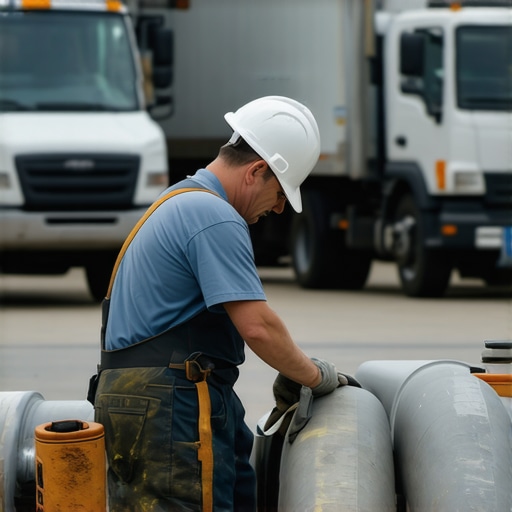
It is 2:15 AM on a Tuesday. A homeowner in your primary service area wakes up to the sound of rushing water – a burst pipe in the basement. Panicked, they grab their phone and search for “emergency plumber near me.” You are located exactly 0.5 miles away, literally two streets over. You have the trucks, you have the tools, and you are ready to work. Yet, when that homeowner looks at the Google Map Pack, your business is nowhere to be found. Instead, Google highlights a competitor located four miles away in the next town over.
This isn’t a glitch; it is the Proximity Paradox. For years, the prevailing wisdom in local search was that “nearer is better.” While proximity remains a core pillar of the local algorithm, Google’s primary objective has shifted toward “relevance and usefulness in real-world situations,” as highlighted in recent Big Orange Planet research. In high-stakes emergency scenarios, Google doesn’t just want the closest plumber; it wants the best plumber who is most likely to solve the user’s specific problem immediately.
If you have ever wondered Why Local Plumbers Lose Half Their Leads Just Three Miles From the Office, you are witnessing the Proximity Paradox in action. Your physical location is a fixed coordinate, but your digital visibility is fluid. If your competitor has mastered the art of “Spatial Trust,” they can effectively leapfrog you in the rankings, capturing the high-intent emergency calls that should have been yours.
The Three Pillars of the Local Algorithm
To understand why you’re losing out, we have to look under the hood of the Google Map Pack. Google uses three primary lenses to evaluate which businesses to show: Proximity, Relevance, and Prominence. While you have little control over Proximity (where the user is standing), you have total control over the other two. This is where google business profile seo becomes the deciding factor between a ringing phone and a silent office.
The August 2024 algorithm update significantly refined what SEOs call “distance bias.” Previously, Google would often default to the absolute closest business, even if that business had a poor reputation or an incomplete profile. Today, the algorithm is much more sophisticated. It now weighs the “authority” of a location against its physical distance. If a competitor three miles away has significantly higher Prominence and Relevance scores than you, Google will determine that the extra three-mile drive is worth the “better” result for the user.
This explains why your map listing ranking disappears two blocks from your office. You might dominate the street you’re on, but as soon as you move into a more competitive “cell” of the map, your lack of Relevance and Prominence causes your pin to drop off the face of the Earth. To stay visible, you must prove to Google that your business is the most authoritative choice within a wider radius.
Why Relevance Trumps Distance
Relevance is the measure of how well a local business profile matches what a user is searching for. If a homeowner searches for “sump pump repair,” and your profile only says “Plumber,” but your distant competitor has “Sump Pump Repair and Installation” listed explicitly in their services and mentioned in their recent updates, the competitor wins. They are more “relevant” to the specific need, even if they are further away.
Effective google business profile optimization involves more than just filling out your name and phone number. It requires a deep dive into the specific categories and services that Google’s AI associates with your industry. According to MapRanking.com, success in the modern map pack is rooted in a “continuous optimization strategy.” This means regularly updating your service list, adding high-quality photos of specific jobs, and using the “Updates” feature to signal to Google that you are active and specialized.
Plumbers often make the mistake of setting their service area too wide without providing the content to back it up. If you claim to serve a 20-mile radius but your website and profile only mention your home city, Google’s “Spatial Trust” in your business diminishes. You need to use local seo tools to identify the keyword gaps in your profile. Are you mentioning “emergency 24/7 service” in your description? Are your “Services” menus fully expanded with descriptions for each item? If not, you are handing leads to your competitors on a silver platter.
Furthermore, you must understand How to Structure Service Area Pages So They Actually Generate Calls. Your Google Business Profile (GBP) doesn’t exist in a vacuum; it is tethered to your website. If your website lacks localized relevance for the towns three miles away, your GBP will struggle to rank there.
The Prominence Gap: Reviews and Authority
Prominence is essentially a digital popularity contest. It’s how well-known a business is in the eyes of Google. This is calculated using information that Google has about a business from across the web, like links, articles, and directories. But for plumbers, the most vital component of Prominence is the review signal.
Consider this: A homeowner sees two options. One is 0.5 miles away with 5 reviews and a 4.2-star rating. The other is 3.5 miles away with 150 reviews and a 4.9-star rating. Google’s algorithm knows which one the user is more likely to click. By choosing the more prominent business, Google ensures a higher “Success Rate” for the search. If you want to compete, you need a professional google maps ranking service that focuses on building long-term authority rather than just quick fixes.
Beyond just the number of reviews, Google tracks “Behavioral Metrics.” This includes the Click-Through Rate (CTR) from the map pack to your profile and how many people click the “Call” button. If users consistently skip over your listing to click on the guy further away, Google learns that your listing isn’t what people want, and your ranking will tank. This creates a feedback loop: lower prominence leads to fewer clicks, which leads to even lower prominence.
Managing your reputation is critical. Even a negative experience can be leveraged if handled correctly. Knowing The One Review Response That Turns a 1-Star Mistake Into a 5-Star Win can help maintain your prominence score even when things go wrong. Google rewards businesses that engage with their customers, as it signals a “live” and trustworthy operation.
Technical Failures: The “Invisible” Barriers
Sometimes, you can do everything right with reviews and keywords and still lose. This is often due to technical failures that make Google distrust your location data. NAP consistency (Name, Address, Phone number) is the baseline, but as we move into 2026, the technical requirements have become even more stringent. One of the most common issues we see today is what we call “Satellite Ping Errors.”
A Satellite Ping Error occurs when the digital “footprint” of your business doesn’t align with the GPS data Google collects from mobile devices and street-view mapping. If your citations across the web point to an old suite number, or if your “pinned” location on the map has shifted slightly due to a map data merge error, Google’s “Spatial Trust” breaks. They won’t risk showing a business for an emergency call if they aren’t 100% sure the business is actually there. Utilizing a specialized gmb ranking service is often necessary to audit these deep-level technical discrepancies.
For Service Area Businesses (SABs), this is even more complex. Plumbers often hide their address, which triggers a “Radius Squeeze.” Without a physical storefront for Google to verify via “Live Scan,” the algorithm relies on localized signals from your website and third-party mentions. If those signals are weak or inconsistent, Google will default to a competitor with a verified physical office, even if they are further away. You need to address the 3 Satellite Ping Errors Your GMB Map Expert Must Fix Now [2026] to ensure your digital coordinate is locked in.
The 2026 Roadmap to Dominating the Map Pack
As we look toward the future of local search, the “sneaky tricks” of the past – like keyword stuffing your business name – are not only ineffective but dangerous. Google’s AI is now capable of detecting “Live Scan Failures,” where a business’s claimed location doesn’t match real-time traffic and mobile patterns. To rank higher on google maps in 2026, you must embrace “Proof-of-Life” content. This includes short-form videos of your team at job sites, which provide undeniable metadata proof of your service area.
We are also seeing the rise of the “Hybrid Pin Test.” Google is increasingly testing listings by temporarily expanding their reach to see how users interact with them. If your profile is backed by robust local seo software that tracks these fluctuations, you can capitalize on these “test windows” to cement your higher ranking. Focus on “Spatial Trust Fixes” – ensuring your business is mentioned on local neighborhood blogs, community directories, and local news sites.
To stay ahead, follow these 7 Google Business Profile Tips for 2026 Every Local Shop Needs. The plumbers who win the next decade won’t be the ones who are simply the closest; they will be the ones who are the most digitally “present” in the minds of both the consumer and the algorithm.
Stop Losing Leads to the “Guy Across Town”
Proximity is a baseline, but Relevance and Prominence are your weapons. If you are tired of watching your competitors catch the emergency calls that should be yours, it is time for a technical audit of your Google Business Profile. Don’t let a “Satellite Ping Error” or a lack of service-specific keywords stand between you and your next big contract. Master your local SEO, and turn the Proximity Paradox into your greatest competitive advantage.