
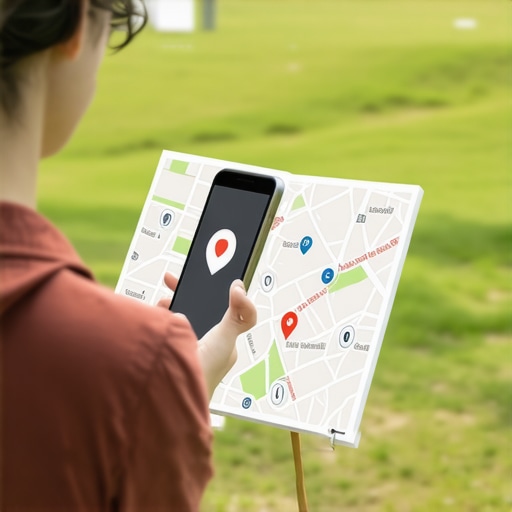
Stop Blindly Embedding Google Maps: The Right Way to Prove Your Physical Location
If you think that copy-pasting an iframe code onto your contact page is enough to secure your spot in the local Map Pack, you are operating on an SEO playbook that expired years ago. In the current search landscape, a map embed is a courtesy to your users, not a ranking signal for Google. I’m Marco Herrera, and I’ve spent years deconstructing how Google validates physical entities. If you want to dominate the Map Pack in 2025 and 2026, you need to stop focusing on passive widgets and start focusing on “Spatial Trust.”
Section 1: The “Map Embed” Myth and the Proximity Paradox
The industry is rife with the “Map Embed Myth.” The idea is simple: embed a Google Map on your site, and Google will magically understand you are located there. While this was a minor signal a decade ago, it has become virtually irrelevant in an era of sophisticated spam and virtual offices. Today, 80% of consumers search for local businesses online before making a purchase. With over 870 million “near me” searches processed monthly, Google cannot afford to rely on a snippet of code that anyone can generate in three seconds.
We are currently facing what I call the Proximity Paradox. You might have a verified address, a clean office, and a legitimate business, yet your listing remains invisible to someone standing just three blocks away. This happens because Google’s algorithm has shifted from simple NAP (Name, Address, Phone) consistency to “Entity Authority.” Google isn’t just looking for your address; it’s looking for proof that your business is an active, breathing entity at that specific coordinate. This is exactly why your map listing ranking disappears two blocks from your office even when your site looks “optimized.”
To break through this, you must understand that google business profile seo is no longer about static data. It is about the continuous broadcast of location-based signals that confirm your physical presence to the algorithm. When you fail to provide these signals, Google defaults to the safest bet: the competitor who has “proven” their location through more than just a contact page embed.
Section 2: Technical Proof – Moving Beyond NAP to Entity Signals
If NAP is the foundation, Entity Signals are the skyscraper. To prove your location to a machine, you have to speak its language. This starts with Local Business Schema (JSON-LD). This isn’t just a “nice to have”; it is the “secret handshake” between your website and Google’s database. Schema allows you to explicitly define your latitude and longitude, your service area, and your relationship to other local landmarks.
Google’s algorithm now cross-checks your NAP data with what research calls “local intent signals.” This includes everything from the GPS data of users visiting your office to the metadata hidden in the images you upload. If your website says you are in downtown Chicago, but your server headers or third-party mentions suggest otherwise, you create a “Signal Mismatch.” This is why many businesses find that The Schema Mistakes That Make Your Business Invisible to Local Search are often the primary reason they can’t break into the top three.
Using advanced local seo software is essential for monitoring how these signals are being interpreted. You need to ensure that your digital footprint isn’t just consistent, but technically reinforced. This means your JSON-LD should link your Google Business Profile (GBP) CID directly to your website’s entity node, creating an unbreakable link between your web presence and your physical map pin.
Section 3: The 2026 “Proof-of-Life” Content Strategy
As we move into 2026, Google is doubling down on visual and behavioral verification. We are seeing a massive shift toward what I call “Proof-of-Life” content. A passive profile that only updates its hours once a year is a dead profile in the eyes of the algorithm. This is Why Your GMB Map Expert Needs This 2026 Proof-of-Life Video to maintain your rankings.
The Rise of Video Verification and Live Scans
Video is the gold standard for 2026. Google is increasingly requiring video verification for new listings and using AI to scan those videos for “live” signals – signs of actual business activity like staff interacting with customers or equipment in use. But “Proof-of-Life” goes beyond the verification process. It includes:
- Geo-Tagged Photos: Uploading photos with embedded EXIF data that matches your business coordinates.
- Live Scan Signals: Consistent updates to your profile that reflect real-world changes (seasonal offers, new team members, local events).
- Behavioral Validation: Encouraging “Request Directions” clicks and monitoring the subsequent GPS movement of the user toward your location.
The “Radius Squeeze” is real. Google is actively shrinking the visibility of businesses that cannot provide these high-level verification signals. If you are relying on stock photos or generic content, you are essentially telling Google that your location is a ghost town. This is also Why Your GMB Map Expert Rejects Those Blurry Smartphone Photos; if the metadata is stripped or the quality is too low for AI object recognition, the photo provides zero ranking value.
Section 4: Solving the “Ghost Pin” and Radius Drop Issues
One of the most frustrating issues business owners face is the “Ghost Pin.” This is where your listing shows as verified in the dashboard, but simply does not appear on the map for relevant searches. Often, this is caused by 3 Satellite Ping Errors Your GMB Map Expert Must Fix Now [2026]. These errors occur when Google’s internal mapping data conflicts with the physical coordinates provided, often due to poor map pin placement or outdated street-view data.
Another common technical failure is the “Radius Drop.” You might rank #1 when searching from your office parking lot, but drop to #20 when you move three miles away. This is a sign that your “Relevance and Reliability” signals are weak. Google trusts you are there, but it doesn’t trust you are the *best* option for the wider area. To fix this, you need a professional google maps ranking service that can implement 5 Specific Fixes for the 2026 Map Listing Ranking Radius Drop, such as localized backlink clusters and service-area specific landing pages that reinforce your authority across the entire city, not just your immediate block.
Section 5: The Audit Checklist – Spotting the Invisible Errors
To dominate, you must be willing to look at the data that your competitors ignore. Most people use a basic audit tool and think they are done. However, there are 5 Crucial Red Flags Your Google Business Profile Audit Tool Missed that can only be found through manual technical analysis. Here is how a professional Map Ranking Pro: 5 Mistakes Killing Your 2026 Local Leads approaches an audit:
The “Boring Spreadsheet Tactic” for NAP Cleanup
While automated tools are great, they often miss “Near-Matches.” A manual audit involves documenting every single mention of your business across the web in a spreadsheet. We look for:
- Old suite numbers in obscure directories.
- Variations in business naming (e.g., “Herrera SEO” vs. “Herrera SEO LLC”).
- Tracking numbers that have replaced your primary office line on third-party sites.
Cleaning these up ensures that there is zero friction for Google’s crawler. Once your data is clean, you need to use a google maps rank tracker to monitor your progress. Don’t just look at a single keyword; look at a geo-grid. You need to see how your “ranking bubble” expands as you clean up your technical signals. This is one of the 5 subtle errors a gmb map expert fixes that separates the amateurs from the specialists.
Section 6: Conclusion & The Path to Local Domination
The days of “set it and forget it” Local SEO are over. Proving your physical location is an ongoing technical challenge that requires a combination of precise Schema markup, aggressive “Proof-of-Life” content, and meticulous data hygiene. If you are still relying on a simple map embed to do the heavy lifting, you are leaving your most valuable leads on the table.
Stop blindly embedding and start building a profile based on Spatial Trust. Audit your proximity signals immediately. Look at your geo-grid. If you see your rankings dropping off a cliff just a few miles from your office, it’s time to stop guessing. Utilize the right local seo tools and technical strategies to ensure Google views your business not just as a pin on a map, but as a dominant local authority.
Ready to prove your location and claim your spot at the top? Start by implementing How to Prove Your Map Pack Strategy Is Actually Sending Real Customers Through the Door and watch your local visibility transform.