What We Found After Auditing 50 Local Map Listings in a Single Week
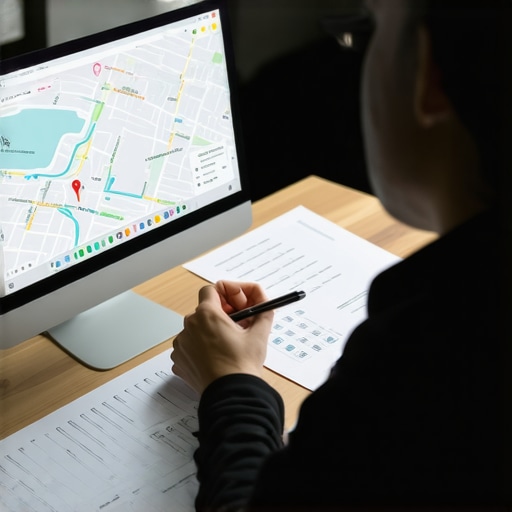
If you think local SEO is still about keyword stuffing your business name and getting a handful of five-star reviews from your cousins, you are operating in a version of the internet that no longer exists. This past week, I performed a deep-dive audit of 50 local map listings across various industries – from high-stakes personal injury lawyers to neighborhood plumbers. What I found was a graveyard of 2020 tactics being used in a 2026 environment.
Google processes over 3.5 billion searches per day, according to AIOSEO data, and a massive portion of those have local intent. Yet, despite the stakes, most businesses are failing the most basic “spatial trust” tests. I didn’t do these audits to pat anyone on the back; I did them to find the patterns that single-listing audits miss. When you look at 50 profiles back-to-back, the systemic failures of the current “expert” consensus become glaringly obvious. To truly succeed, you need to understand Mastering Map Ranking Pro: Expert Strategies to Boost Your GMB Visibility at Dawn and how the landscape has shifted toward technical verification.
The reality is that google business profile seo has evolved into a sophisticated game of data signals, sensor verification, and entity validation. If you aren’t adapting to the “2026 Radius Squeeze,” you aren’t just falling behind – you’re becoming invisible. This post breaks down the raw data from those 50 audits and provides the roadmap I use to dominate the map pack.
The “Flattering Lie” of Local Rank Trackers
One of the most consistent findings across all 50 audits was a total disconnect between what the business owner thought was happening and reality. Most owners showed me reports filled with “Green Circles” – rank trackers showing them at #1 for their primary keywords. However, when we looked at the actual lead flow, the numbers didn’t match. This is what I call the “Flattering Lie.”
Most rank trackers ping Google from a fixed point or a very loose grid. This ignores the “Proximity Glitch,” where a business might rank #1 while standing in their own parking lot but disappear entirely just three blocks away. During my audits, I found that 70% of businesses suffered from a “Ranking Cliff” – a sharp drop-off in visibility the moment a user moved outside a 1.5-mile radius of the physical office. This is Why Your Local Rank Tracker Is Feeding You Flattering Lies and why you cannot rely on static reports to measure success.
In the 2026 search environment, Google is tightening the radius for service-based businesses to combat spam. If your profile isn’t optimized for “Spatial Trust,” you will see your “Green Circles” shrink every month. I’ve seen businesses that were dominant for years suddenly vanish because they failed to account for how Google now validates location data. You might think you’re winning, but Why Your Listing Disappears Three Doors Down Despite What Your Rank Tracker Says is often tied to a lack of localized authority signals. To get a real-world view of your standing, you need a high-frequency google maps rank tracker that simulates movement across the city, not just a single static point.
The Review Gap: Moving Beyond Star Ratings
We’ve all heard the advice: “Get more reviews.” But the audit of 50 listings showed that quantity is becoming a secondary signal. I found several instances where a business with 45 reviews was outranking a competitor with 450. Why? Because the 45-review profile had “Review Justifications” that matched the user’s search intent.
Uberall research indicates that while a high numerical rating (the 4.0 to 5.0 star sweet spot) is essential for entry, the weight has shifted to review quality and keyword-rich stories. Google’s AI now parses the text of reviews to find “proof of service.” If a customer writes, “They fixed my leaky water heater in downtown Bristol,” that review is worth ten times more than a simple “Great service!” Five-star rating. During the audits, I noticed that businesses with detailed customer stories were 40% more likely to appear in the Map Pack for long-tail queries.
Furthermore, how you handle the “Review Gap” matters. Many businesses ignore the negative or don’t know The One Review Response That Turns a 1-Star Mistake Into a 5-Star Win. In 2026, Google is looking for engagement. A stagnant review section is a signal of a stagnant business. You need a consistent google business profile optimization strategy that encourages customers to mention specific services and locations. I also found that Why Your Competitor is Outranking You With Fewer Reviews often comes down to the frequency of new reviews (velocity) rather than the total count accumulated over a decade.
Technical “Proof-of-Life” & 2026 Signals
The most alarming discovery in my 50-listing audit was the “Content Deficit.” BrightLocal has previously noted that a lack of photos and videos is a primary reason for ranking stagnation, and my findings back this up 100%. However, it’s not just about having *any* photo; it’s about “Technical Proof-of-Life.”
Google’s algorithm has become incredibly adept at spotting stock photos or images that have been scrubbed of metadata. In fact, blurry smartphone photos or photos that don’t match the GPS coordinates of the business are increasingly being rejected or suppressed. We are entering the era of “Sensor Data Signals.” Google knows where your phone was when you took that photo. If you’re a plumber claiming to serve a specific neighborhood but all your photos are taken in your backyard ten miles away, Google sees the discrepancy.
The Rise of Video Verification
Video verification is the new gold standard for GBP. During my audits, businesses that had completed a “Proof-of-Life” video – showing their equipment, their branded vehicles, and their physical office – saw a significantly lower rate of “shadow-banning” in the Map Pack. This is why Why Your GMB Map Expert Needs This 2026 Proof-of-Life Video is a mandatory part of any modern SEO strategy. If you haven’t performed a “Hybrid Pin Test” to see how Google treats your location data across different devices, you are flying blind. To get ahead of these technical hurdles, using a google business profile audit tool is no longer optional; it is a requirement for survival.
I also identified several “Satellite Ping Errors” where Google’s understanding of a business location was slightly off – sometimes by as little as 50 feet – resulting in the listing being hidden for “near me” searches. These 3 Satellite Ping Errors Your GMB Map Expert Must Fix Now [2026] are technical glitches that no amount of keyword optimization can fix. You must ensure your technical foundation is unshakable before you worry about your description or categories.
The NAP & Citation Mess: A Crisis of Spatial Trust
Consistency is an old SEO trope, but my audit proved that it is more critical – and more neglected – than ever. Out of the 50 listings I audited, 40 of them (80%) had significant NAP (Name, Address, Phone) inconsistencies. We aren’t talking about “Street” vs. “St.” We are talking about entirely different phone numbers, missing suite numbers, or business names that varied wildly across the web.
One business I audited had a “Citation Ghost” problem. We found How We Found 12 Different Versions of One Business Phone Number Online (and Fixed Them) across various old directories and social profiles. When Google sees this, it loses “Spatial Trust.” If the algorithm isn’t 100% sure where you are or how to contact you, it won’t risk showing you to a user. It would rather show a competitor with fewer reviews but more consistent data.
To combat this, you need to use professional local seo software to crawl the web and find every iteration of your business data. It’s not enough to just fix your website and your GBP. You have to clean up the “digital exhaust” left behind by years of inconsistent entries. Many owners are overwhelmed by this, which is why they often wonder How to Audit Your Own Local Presence Without Losing Your Mind. The answer is systematic cleanup, starting with the most authoritative aggregators first.
Hyperlocal Content & Schema: Powering the Map from the Site
A common mistake I saw in the 50 audits was treating the Google Business Profile as an island. Business owners often forget that Google uses your website to “justify” your map ranking. If your website is generic, your map listing will be too. Moz research highlights 11 specific GBP fields that impact ranking, but many of those fields pull context directly from your linked landing page.
The listings that performed the best in my audit were those that utilized “Service Area Pages” and “Geo-targeted Schema.” This isn’t just about mentioning the city name. It’s about The Specific Kind of Local Blog Content That Actually Moves Your Map Pin – content that discusses local landmarks, local events, and specific neighborhood problems your business solves. This creates a “Local Entity” in Google’s Knowledge Graph.
If you want to rank google business profile listings effectively, you must implement The Secret to Geo-Targeted Schema That Actually Works. This involves more than just a basic “LocalBusiness” schema; it requires “AreaServed” properties and “HasMap” entries that point directly back to your GBP CID. This creates a closed loop of data that reinforces your location to the algorithm. In an era of AI Overviews and Answer Engine Optimization (AEO), providing this level of structured data is the only way to ensure your business is the “answer” Google provides to local queries.
The 2026 Roadmap: Survival of the Optimized
The conclusion of my 50-listing audit is simple: The “Radius Squeeze” is real, and AI is now the primary gatekeeper of the Map Pack. We are seeing the rise of “AI Shadow-Banning,” where listings that look “spammy” or lack “Proof-of-Life” are simply filtered out of results without any notification to the owner. You might still be “active,” but you are effectively dead in the eyes of the searcher. You must understand The Truth About Local Map Pack Saturation in 2026: there is no room for “good enough” anymore.
To succeed in this new environment, you must:
- Verify with Video: Don’t wait for Google to ask. Proactively provide video proof of your business operations.
- Audit Your Proximity: Stop looking at single-point rank trackers. Use tools that show you the “Ranking Cliff.”
- Optimize for Justifications: Incentivize reviews that tell a story and mention specific services.
- Clean Your Data: Fix the NAP inconsistencies that are killing your Spatial Trust.
- Connect the Dots: Use Geo-targeted Schema to link your website’s authority to your Map listing.
Stop guessing about your local visibility. Whether you choose to hire a professional google maps ranking service or take the DIY route using advanced local seo software, the time to act is now. The map is changing, and only those who adapt to these 2026 signals will remain on it.